Showing posts with label stress. Show all posts

Thursday, February 12, 2015

From a climate of judgement to a climate of acceptance

Awesome to sit down with four students today for a chat about school climate. This weekend I'll write a more complete reflection, but for now I just want to say a few things.

First: Young people are #awesome, and their world is not so different from ours (though it may be harder in many ways). Some of the words and phrases that came out when I asked about the general climate in school were "judgement." Others were "social stressors," "ostracization," and "cliques." They talked about peers who "just want to show their superiority, so they put others down."

Power plays. Not unique to the teen years, but more fundamental in some ways, since at this stage in their lives their whole identity is more tied up with their social world.

And when I asked at the end, "If you could wave a magic wand and change one thing about the school, what would it be?," there was talk about overwhelming homework and school lunches, but then one said, "I'd make it so people weren't afraid to be themselves."

This resonates with what the Looking In Theatre students had to say the other day.

So much of the school climate is about whether there is a climate of acceptance, or lack thereof.

So this will be a priority of mine: Try establish a climate of acceptance--a place where you can be yourself.

How?

One student suggested bringing in alumni who had been "different" and maybe even ostracized in school but were now "successful."

So while we can't force kids to be open and accepting or to express themselves and be secure in who they are, we can certainly model it. We can provide examples, starting with ourselves.

Monday, February 2, 2015

Ambition v. contentment


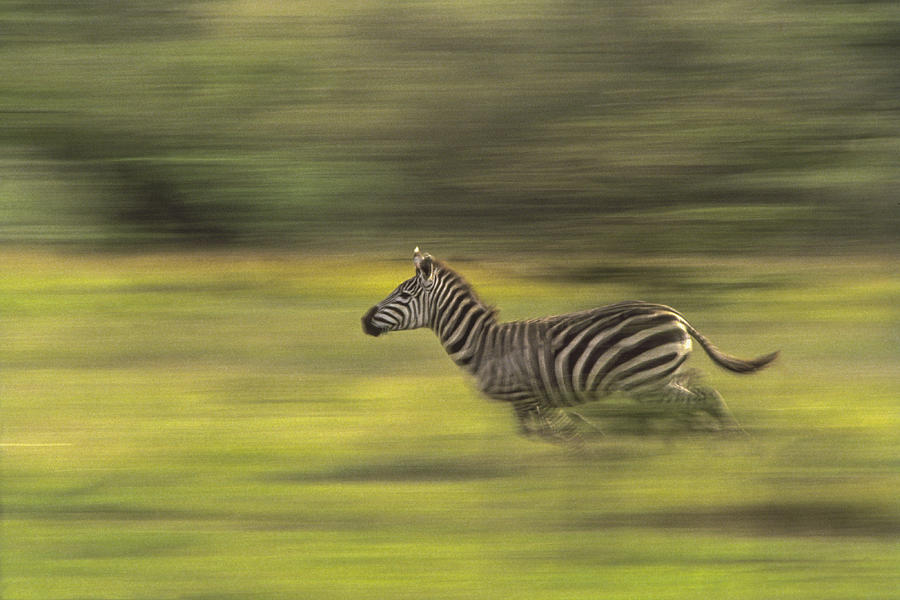
http://images.fineartamerica.com/images-medium-large-5/running-zebra-boyd-norton.jpg
Had a short discussion with a student the other day about this: How do you balance contentment with the desire to improve?

I had struggled with this in a previous post, and wasn't quite satisfied with the result. Then yesterday I read this post on the topic, and loved the way a conversation with her friend summed up the problem.


She writes:
“All I truly want to be in life is content,” I told him confidently. I was sure I had life figured out once and for all.

“Great,” he replied, “but is content all you ever want to be? What about always aiming for something bigger? What about your desire to continually grow and learn and transform?”

Sigh. I knew he was right. After almost burning out on creating stress, I had gone too far in the other direction. I had lost sight of my vision.
And her solution echoed my thoughts:
Active contentment. Such a liberating concept. It’s about being completely at peace with who you are and what you’re doing in the moment while simultaneously maintaining a vision for the future.
But somehow I was still unsatisfied. How can you be both at the same time? Is this like Schroedinger’s Cat or something?

I don't think so. My latest thinking on this is that contentment and improvement are inherently incompatible.

Stay with me. This morning I was reading Flow by Mihaly Csikszentmihalyi, and came across his thoughts on the subject:
Optimal experience is not the result of a hedonistic, lotus-eating approach to life. A relaxed, laissez-faire attitude is not a sufficient defence against chaos. As we have seen from the very beginning of this book, to be able to transform random events into flow, one must develop skills that stretch capacities, that make one become more than what one is. Flow drives individuals to creativity and outstanding achievement.
And then a quick search pulled up this post, in which the writer quotes an interesting study in which, "They did the experiment on a group of employees at a company, and it played out just as stated above.  Those employees who were told to reflect on all they’ve accomplished on the job became happier and less motivated.  The ones who were pushed to reflect on all they still needed to accomplish were less content but harder working."

And I suppose that shouldn't be surprising. There's no reason to suppose the same strategy should work all the time. In fact, it makes sense that the strategy for optimal experience might just vary with the circumstance, i.e. running from a lion vs. enjoying a string quartet.

If so, the solution is simply that the solution varies. For everything there is a season, a time to be content, and a time to change. A time to relax and a time to strive. A time to be mindful, and a time to run like hell.

Wednesday, December 24, 2014

Some thoughts on mindfulness

If you remember that awareness of whatever occurs is meditation, then meditation becomes much easier than you may think.

-Yongey Mingyur Rinpoche

Read this passage this morning in The Joy of Living. It's pretty much the whole  #mindfulness concept/practice in a nutshell.

Amazing how just paying attention to something can make such a difference. My foot fell asleep while I was sitting this morning, and I decided to focus on that sensation in my foot. I had never noticed what it really felt like before--a combination of pressure at certain points and that more familiar prickling sensation. Kind of strange to meditate on your foot, I guess, but surprisingly relaxing, nonetheless.

Or maybe it's the feel of the ground under my feet, or the tension in my muscles as I stretch, or the coldness of the water in the shower, or the texture of the steak, or the sound of the tea china rattling on top of the fridge, or ticking of the clock, or my own breath in my lungs.

But by far the best part yet has been noticing my own thought patterns--selfishness, insecurity, frustration. Mingyur Rinpoche likens our thoughts to a monkey jumping around inside a house, looking out all of the windows. And he says that just watching the monkey jump around is a form of meditation.

It's hard not to get caught up and carried away in the jumping and fretting--become the monkey. But the whole process does have a calming effect, and it's been teaching me to start noticing these thought patterns as they arise and just watch them go by, rather than always hopping around with them.

It's also teaching to to accept my thoughts, my actions, and whatever, and take "the blame," without worrying about it threatening my self-image, because I can see that monkey fretting about it, and I know he's just a monkey.

That awareness and willingness to know and accept everything just as it is is freeing. (It reminds me of  one of my favorite songs, by Tiesto: Just Be.)


Sunday, December 21, 2014

Holiday busyness is not the real problem

Me having fun playing the "elf-off-the-shelf"
Why are the holidays so stressful?

Is it just that there's so much to do, or the stress of tense extended family situations? Is it connected with seasonal affective disorder, or just the effect of adding a bunch of social events and obligations to an already packed schedule?

Probably a combination of all of these, and more.

Last night was the second annual holiday bash we've hosted our our house. I noticed myself getting really stressed out yesterday preparing for it--a by-product of a packed week with no time to prep until the last minute (and an embodiment of holiday stress syndrome).

But, you know what? It was worth it. I can't wait to do it again next year. It was so much fun to catch up with family and friends I haven't seen for months or more, spend quality time with those I see often, and just celebrate and have a blast with everyone.

The things that make me busy over the holidays are not the problem. It's just that I have too much other, less important stuff in my schedule.

Wednesday, December 3, 2014

Zebra envy

It's not uncommon to see teachers  huddled like zebras under attack, passionately attacking CT's new teacher evaluation system. I've been one of them. But it makes me think about the the way that fear hinders us--how it stops us from growing.

Zebras don't get ulcers, at least according to Robert Sapolsky, and here's why: Because they don't fear the lion until they scent her, hear her or see her.

People get ulcers--they experience chronic stress, because our big frontal lobes extend our sight into the distant future, and we see countless lions-that-could be lurking in the grass of the future.

And it's worse than that. There are no lions. The disapproval of our peers turns into a life threatening predator in our subconscious, and failure at work or school is a lion in our minds. The possibility of a bad rating on a teacher evaluation rubric taps into our primal fight-or-flight response, and we respond as if a cheetah were on our tail.

I've been in a few potentially life-threatening circumstances, but none of them had to do with rubrics. I've displeased some people, and failed lots of times, and it's never really warranted the stress it caused me.

Fear is usually a sham--a glitch in the system caused by this combination of the threat-detection system we inherited from our pre-primate ancestors. Unfortunately this is a big glitch, because fear makes us huddle, hide, tense up, shrink back, and bare our teeth, when we should open up and move forward. We end up with missed opportunities, stagnant lives, organizations, and relationships, hostility of all kinds, and who knows what else.

Sometimes I wish I were a zebra. Then I could just enjoy the grass and the breeze and the sunshine until there really was a lion. Of course, then I wouldn't be able to write this blog post or contemplate the mystery of existence either. I guess I'll stick with the cerebral cortex and just learn to see fear for what it usually is: a figment of my imagination, and watch it float by like a dark cloud on the sky of my mind. Then I'll allow myself to be open to new perspectives, open to criticism and improvement, open to change and challenge, open to whatever life has in store.

Monday, May 12, 2014

What's in your bowl?

Bacon, chicken, & avocado salad (http://goo.gl/zBaLRZ)
If you're a recovering stress junkie, like me,  you're constantly playing crazy mental video games,  shooting down tasks before they reach you and it's game over. But how can you ever enjoy the present now, if you're always worried about the next now?

Imagine the present moment like a bowl of food. Future bowls are stretching off far into the distance. We can fill our "now" bowl with sweet things, fun, pleasure, socialization, rest, or we can fill it with hard things--studying, work, planning, and exercise. I tend to focus on worrying about future bowls, filling the now with work, so much so that I can't enjoy life. I don't want to focus too much on the present, because then I may not get as many future bowls.

But neither should I just fill it with stuff that is only "good for me"-- stuff that is only for the future. Why? Three reasons: 1) That future may never come. 2) How many missed "nows" until they outweigh the future "nows" I'm saving up for. 3) How will I ever learn to enjoy the "nows" of the future if I can't enjoy the "nows" of now.

No. What I want to do is fill my "now" bowl with a mixture of things I can enjoy now and things that are preparing me for the future. Maybe some kale, but also some bacon. Maybe some coconut milk, but also some honey. Maybe some carrots, but also some dark chocolate. Maybe one day I'll come up with an equation for what percentage of each moment should be spent enjoying and what percentage working on the next bowl. For now, I'll keep it simple: Next time I'm tempted to sacrifice now for tomorrow, stop and savor at least a bite of the present--every present moment, even in the midst of preparations for future bowls. Make sure every moment has a balance of hard and soft, rough and smooth, pushing myself and having compassion on myself, responsibility and relationships, protecting people and enjoying people, exhaustion and ecstasy, improvement and immersion, struggle and sweetness, justification and joy, roughage, risk, richness, rapture, relaxation and release.

Now, what's in my bowl? What's in yours? What's in ours?