Showing posts with label technology. Show all posts

Tuesday, February 16, 2021

Justice over achievement

https://twitter.com/lunchbreath
Image via https://twitter.com/lunchbreath
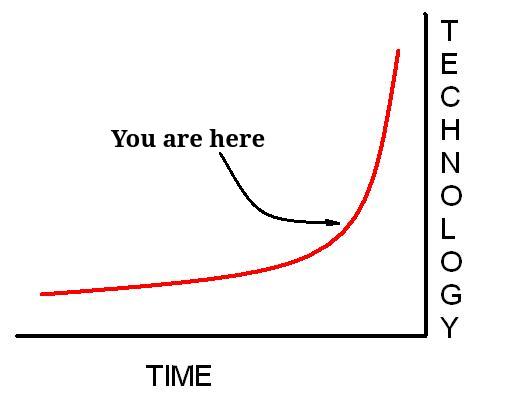
One of my big takeaways from COVID-19 is the importance of equity. Our society, including our educational system, has been built on a model that values overall achievement over equity. In other words, as long as you are enabling your top students, or at best, most students, to achieve at high levels, you are doing a good job. But this is wrong. I've been wrong. I have historically had it backwards, idolizing human potential and achievement and neglecting equity. Here's what I'm learning:

1) Prioritize equity: Better to live in a just society than an advanced one. If forced to choose between a just society or school and a high achieving one, choose just.
2) Don't teach or test in a way that disadvantages some students.
3) If that means the quickest won't progress as fast because you can't support those who are less ready, then that's how it will have to be until we can get better at supporting and challenging everyone. "Do no harm" is the guiding principle.
4) Challenge every student, but not more than they can actually handle. Set the bar high. Let them try. Then adjust it, always trying to challenge them and inch it higher.

So how can we actually do this in the COVID-19 world?

Let's take a look at the primary hinderances kids are dealing with, and some possible solutions.

Access to technology

Problem: Many students of low socio-economic status lack fast, stable internet or computers. This can lead to an inability to participate fully in Zoom calls, especially if webcams are required.

Possible solutions: Don't require webcams. Provide asynchronous options for learning, and extended deadlines. Bring these students in to school, in-person and full time, if possible.

Homelife

Problem: Many students have home environments that are not conducive to participating in live classes. Some are caring for siblings. Others have distracting activity all around them. Others may be embarrassed to show their homes or families.

Possible solutions: Same as above, plus multiple opportunities for learning and success. In other words, mastery-based learning. They need flexibility. They need to be able to take or submit an assessment when they are ready, not on a deadline. They may also need extra academic help and social-emotional resources and instruction.

ADHD, sleep issues, low conscientiousness, low SEL skills

Problem: Many students attempting to learn from home are hindered by a lack of non-cognitive skills: the ability to get up on time, stay awake during class, manage their sleep, schedules, and tasks, stay focused, manage depression or anxiety, etc. These things prevent them from accessing the curriculum.

Possible solutions: Same as above, mastery-based learning, with a focus on explicit instruction in social-emotional learning and 1:1 SEL support. Instruction, assignments and assessments that target SEL skills separately from content skills.

Lack of readiness

Problem: Many students lack the pre-requisite academic skills and knowledge to access the curriculum.

Possible solutions: The mastery model. Extra academic help and support. 

As you can see, I keep coming back to the mastery model. I think it's really going to be the only way forward if we want to keep standards high and value equity. The impact of COVID-19 is going to ripple out into the coming decade, with students entering each successive year less ready than they would have been--and less equal. COVID-19 has disproportionally impacted at-risk students, so we can unfortunately expect gaps to be wider. 

Moving forward, we can either be driven by the fear of losing some imagined edge or status as a individuals, schools, country or society, or we can be driven by compassion and a desire for a just and equitable society. 

2020 was a unique and challenging year, and it's been hard to accomplish much, but one thing we can do is learn. Unfortunately, in our society we have a history of valuing some people over others. We have the opportunity to learn better and change.

Wednesday, December 23, 2020

Thoughts on 2020, education, and evolution as we head into the holiday break

Every morning while I'm shaving, I listen to a motivational playlist I made on Spotify. This morning, Tom Sawyer by Rush came on. Funny how music can do this, but it kind of snapped me out of a rut I had gotten into in my mind over the past few weeks. 

This year has been a survival-mode year for many of us, me included. But I tend to forget that things will change for the better--we will adapt. New and better systems will evolve.

It is events like this that drive evolution. The theory of punctuated equilibrium says that biological evolution happens in fits and starts, driven by major events. Our culture and our systems are evolving. And our educational systems will evolve. 

And while the cognitive load has us all down for the count right now, our eyes need to be on that prize of new and better ways of doing things--ways that will be more resilient to future disruptions like these. 

A few come to mind for education: more authentic assessments that can't be cheated on, rigor that goes beyond memorization and simple application of concepts that can be googled, a focus on social, emotional and other so-called non-cognitive skills, a renewed focus on technical and vocational skills, and a focus on those ideas that really light kids fires--ideas that can compete with (or join forces with?) video games.

I think the same idea holds true outside of education. The past year has shown us all some major weaknesses in how we do things. Will we evolve? I think the answer is a definite yes. The only question is in what direction.

Change, after all, is the only constant in this world.

Sunday, January 7, 2018

Flex, tech, and checks: Preparing the next generation for the A.I. future

I have this one very thoughtful student. The other day, he asked me, "What's the point of any of this when A.I. is going to take all of our jobs?"

Great question, because it is a very real threat. Folks who argue that computers will never make humans obsolete fall prey to the "yeah, but" fallacy.

"Yeah, robots can build cars and stuff, but they'll never beat humans at chess."

"OK, so they're good at chess, but they'll never beat us at Go."

"Yeah, but they can't even tell a cat from a dog."

Except that now they can, and more.

I'll never forget reading about the historic game of Go in which Google's A.I.  beat the human champ. After a particularly surprising move by the computer, one commentator said, 'It's not a human move. I've never seen a human play this move. So beautiful. Beautiful. Beautiful. Beautiful.'"

In the past, new technologies initially eliminated jobs, then ended up creating more jobs in new areas, but in a world where computers can create beauty, will there be any niches left for humans?

One academic thinks that humans will basically become full-time gamers. Others believe A.I. could lead to a world in which none of us have to work at all. Others, like Elon Musk and Stephen Hawking think the A.I. may just get rid of us altogether. This last gloomy option might happen, but as I discussed in my 2013 article, Will humans become obsolete?, I think there are two more good possibilities: 1) A war against the machines, which would probably not go well for us, and 2) A merger between machines and humans. Many would say the merger is already underway. Just look at how much a part of our lives our smart phones are already, and brain-computer interfaces may not be science fiction for long. As they say, if you can't beat 'em, join 'em. The best way to stay competitive with A.I. is to incorporate it into our own brains.

The likelihood of the merger option leads me to a few conclusions about what we should be teaching the kids:

First, it means we really can't predict what's going to happen with any half-decent degree of certainty. Second, it means our focus should be on getting ready for the merger. What kinds of people will be ready for the merger? It seems to me they will have three characteristics:

1) They will be flexible. One common response to the AI threat is that we should focus humans on the imagined gaps in AI capabilities, things that "only humans can do" and higher order skills, like problem solving or social skills. But assuming computers won't out-perform us in these areas is just the Yeah-but fallacy, and filling these gaps will be a game of Whack-a-Mole, with fewer and fewer moles all the time. Who knows what we'll need to be good at? Instead, be ready for anything, and be ready to shape-shift like crazy.

2) They will really understand math, science, computers and technology. They will be tech-savvy. The Luddite who refuses to get on Facebook is unlikely to be able to get in on these technologies, but the computer programmer will have a distinct advantage. I'm not just talking about  hiring more computer science teachers, though that's a great idea. Kids need to be ready to assimilate diverse technologies into their lives and even their bodies.

3) They will be wealthy enough to afford the augmentations as they arrive on the market. It would be great if this were an egalitarian revolution, but I wouldn't count on it. Kids need to be employable right away and able to get good paying, practical jobs.

So here's our curriculum: Flex, tech, and checks. We need to teach kids to be flexible, take advantage of opportunities and learn new things all the time. For this, they need a strong sense of self-efficacy and a growth mindset. We need to teach them to master new technologies and to understand computers--teach them how to "go borg" starting right now. This means a strong STEM focus. And finally, we need to teach them how to work in a lucrative field so they can make money (STEM works for this, too). It's that simple.

I'm not saying this is all we teach. Flex, tech, and checks is just about practicality. We need equal emphasis on the humanities. We are, for now, still human, and while we wait for what's next, we still need to live fulfilling lives in this humble organic substrate. In my mind, that means art, music, philosophy, writing, and history (sounds a lot like STEAM, now that I think about it). Nor am I saying this will guarantee that our species will not go extinct before the next turn of the century, but it may give us a fighting chance of having a say in what's next.

Tuesday, April 7, 2015

Genes are just apps our cells run

Been thinking through ways to make DNA and genetics understandable to my high school biology students.

Simple is important, and oversimplification is often necessary.

Thursday, we move into genetic engineering and the pros and cons of genetically modified organisms (GMOs), a controversial topic these days, with all the calls for labelling GMO foods, protesting against Monsanto, etc.

And I've been listening to Made To Stick, by Chip and Dan Heath, and their S.U.C.C.E.S.S. check-list for making ideas stick--make them:

Simple
Unexpected
Concrete
Credible
Emotional
Stories

With technical concepts like the way that "information" in DNA is used to make proteins in your cells which then are used for all sorts of things in your body, and eventually create traits like eye color and who knows what else. It's hard to make a SUCCESSful message.

I wasn't able to hit all 6 criteria on the Heath brother's check-list, but here's what I came up with:

Genes are the apps our cells run.

I like it, but will they? We'll see.

It has lots of cool extensions: genetic engineering--making Glo Fish with jellyfish genes or making corn that can survive Round-Up herbicide--is just like downloading a new app into the cells of teh the fish or plants.

And just imagine what sorts of "apps" we might download into our own cells in the future?

Saturday, March 14, 2015

Digital whitewater and teens

At a school climate committee meeting the other day, someone mentioned that they thought the emergence of social media has dramatically increased the complexity of the lives of teens.

I think this is kind of profound, and I think it's not just teens whose lives have been complicated, but what's it all about? A few thoughts:

1) Powerful distractions are ALWAYS just a click away. I was talking with student a couple of weeks ago about his playing games on his cell phone while he worked on his assignment. He said, "Yeah.. I kind of wish there weren't so many distractions in life."

2) And social distractions are among the most powerful, if not the most powerful. We are, after all, hypersocial animals. I used to think that was just the ants, bees, wasps and termites, but the more I learn about humans, the more we look similar. And cell phone social media puts all of this just a tap away, any time, anywhere.

3) The size of social circles this puts us in blows Dunbar's number out of the water. We left 150 in the dust 10,000 years ago, but texting, FB, Twitter, Snapchat, have vastly accelerated this effect.

4) The result: Social-emotional singularity, a point beyond which we can't predict the future. The effects of these changes rippling through our minds and society are unpredicatable.

5) This causes stress. Ours has been called a "whitewater" world, and with good reason. We are riding the wave of massive change, and teens are right at the front, right at the time in their lives when social factors seem most important, and when hormones and mental development are screaming for adventure and excitement.

6) Take home message: None of us really have this mastered, and we're all in it together. This calls for understanding, and it calls for intentionality in exploring these issues and working on dealing with these changes together. Need teach first ourselves, then our students how to adapt.

Just thinking.

Tuesday, February 17, 2015

A better fit between humanity and the modern world

http://abcnews.go.com/blogs/technology/2012/06/cave-paintings-in-spain-so-old-neanderthals-could-have-done-them/
There are several things about the modern world that do not seem to fit well with the biological and psychological make-up we have inherited from our ancestors, and this leads to a dilemma.

For one, the advent of agricultural and large scale grain production led to a diet that is dominated by carbohydrates, and there are some (including myself) who believe that we're really not built for this kind of diet. (I switched to a primal-paleo diet more than two years ago, and it has made a huge difference in my health and well-being.)

And this is about more than just diet. There are many incongruencies between modern life and the lives under which our bodies and minds evolved. Take exercise, for example, diurnal sleep cycles, and the structure of leisure time. And some even point to major incongruities in sexual norms as a source of modern discord.

All of this highlights that same tension I've wrestled with in these posts before: the tension between contentment and improvement, between primitive simplicity and the worries of the complex, modern world, between getting back to our ancestral roots and expanding our horizons through technology. (I sometimes wonder if it comes down to choosing between quality of life and longevity, but that's a discussion for another time.)

The point is, it's easy to see how we might well be happier, at least in some ways, if life were simpler and more attuned with our evolutionary environment. It's easy to see how the complexities of modern life, education, and employment, the busyness, the countless potential threats to keep track of, and the barrage of distractions and information are all causes of trouble.

And it's easy to see how our ancestors probably got lots more exercise, were better attuned to their bodies natural rhythms and in general, were better attuned to the social rhythms of their tribe, and generally lived lives more suited to human nature.

But it's also easy to see the advantages of the modern world. Medicine tops the list for me, but I also appreciate heat, bedding, a stable food supply, electricity, modern transportation, and the internet.

And then there's the fact that, were it not for modern technology and science, we would not know our ancestral heritage in the first place.

And of course, the development of modern technology was probably inevitable.


But still, I have to wonder, do we have to choose between the two? Do we have to sacrifice optimal conditions for humans in order to embrace technological advance?

It's almost as if, through the process of evolution and technological development, our species finally woke up and become self aware, but not until after it put itself into a rather difficult situation, and now the question is what to do about it.

We can't very well go back. As Mihaly Csikszentmihalyiput put it near the end of his classic book on the psychology of optimal experience:
"Few would argue that a simpler consciousness, no matter how harmonious, is preferable to a more complex one. While we might admire the serenity of the lion in repose, the tribesman's untroubled acceptance of his fate, or a child's wholehearted involvement in the present, they cannot offer a model for resolving our predicament. The order based on innocence is now beyond our grasp. Once the fruit is plucked from the tree of knowledge, the way back to Eden is barred forever."

So what's an exile to do? 

What if, through science and technology and her own ingenuity, humanity was able to solve this problem, as she has done so many problems in the past, and find a way to tailor all of this modern complexity to her own ancestral nature? Or maybe she could change her own nature to fit the technology: Hack the world or hack human nature. Neither is out of reach.

And either way, THIS is a goal worth striving for. A better match, a better fit between the world and us.

Sunday, February 8, 2015

Still analog after all these years

As a tech junkie, it's sometimes hard for me to admit that the technology is just not there yet to totally replace the real world. 

Don't get me wrong, the day may come, and it may even be soon, when computers can do pretty much everything we can do, and better (watch this short video about algorithms that can author blog posts).

And though I very much enjoy the real, physical, dirt, sweat (and snow) world, I must say I feel like reality leaves plenty of room for improvement. I wouldn't mind being able to adjust certain settings on my brain at certain times, for example (and then there are things like cancer...).

But though we're progressing at breakneck speed, we don't want to embrace tech for tech's sake. For one thing, history is strewn with examples of humanity biting off more technology than it (or the environment) can chew at the time. And though I love the internet and mobile tech, we don't fully understand the potential impacts on our brains.

But that's not my main point. I'm willing to take a few risks for the sake of the advantages of early adoption. I'm more concerned about the practicalities. 

Case in point: Bullet Journal.

I'm a planner/to-do-list type, and was never able to find an app that could do everything I needed (though I love Google Calendar). Then I found Bullet Journal. Only it's not an app--it's a paper-based system designed by an art director named Ryder Carroll. And it's awesome. Even as a tech addict, I'm not ashamed to say I use a paper planner and journal when it's a brilliantly elegant system like this. The computer-based technology is simply not there yet. It hasn't reached the multi-faceted flexibility of this analog system.

And of course there are countless similar examples, most of which are much more significant than planners: Real human relationships, for example. They are still analog, of course, and I imagine it will be a while before they are replaced by a 100% digital version. And it will be a while before there's a digital replacement for hiking the Great Gulf Wilderness.

The problem comes when we try to jump the gun, when we think the tech is there and it's not, or when we jump in without looking first, or when we adopt without understanding the consequences, or are caught off guard. Social media are an awesome way to increase our connections with others, for example, but they easily become a distracting or addictive. Google is an awesome resource, but it can lull us into intellectual laziness if we're not careful.

The answer is not a Luddite knee-jerk rejection of tech, but nor is it blind immersion. It's about intentional and careful experimentation and thoughtful adoption. And patience. And for techies like me, willingness to admit that sometimes (often times?) the pen and paper, flesh-and-bones, or face-to-face method is still better. 

The question is, what's really the best way to do what we need (or want) to do.

Saturday, January 24, 2015

Literacy in the internet age

As of 2014 Google has indexed 200 Terabytes (TB) of data. To put that into perspective 1 TB is equivalent to 1024 Gigabytes (GB). However, Google’s 200 TB is just an estimated 0.004 percent of the total Internet. Perhaps even more impressive is the fact that 16 years of video is uploaded to YouTube every day. - See more at: http://www.websitemagazine.com/content/blogs/posts/archive/2014/07/22/do-you-know-how-big-the-internet-really-is-infographic.aspx#sthash.hWliUNOT.dpuf
It's been estimated the internet may contain 5 exabytes of information. That's 2 million times the theoretical  capacity of a human brain, which may be 2.5 petabytes. And it's amazing that all of this is accessible with the tap of a few keys.

But is it, really? Or is the Google search a serious bottleneck between our brains and this vast treasure trove of extra input?

After all, finding what you're looking for on the internet is actually not simple. There's an art and science to the Google search, and it's a very verbal-linguistic sort of thing. Phrase the search differently, and you get a very different result.

Not only that, but once you find it, you have to read it (or at least comprehend the video or podcast).

This means two things (for now):

1) Although the information is out there, it's certainly not as accessible as the stuff in our own brains. We obviously haven't yet reached the time when our memories can be replaced by cloud storage. We still need to know the facts we want easy and quick access to.

2) Literacy skills are essential to accessing this treasure trove of knowledge. You can't get at it without being able to compose a good search. Of course, this situation may change in the near future. Imagine a direct interface between the web and you mind: It might at first be verbal-linguistic, but no reason it couldn't evolve to work just like our minds' own mechanism of information recall.

But for now, you rally need to have good literacy skills to be good at using the internet. So while it's true that memorization of facts is not nearly as important as it once was, literacy is more important than ever.
As of 2014 Google has indexed 200 Terabytes (TB) of data. To put that into perspective 1 TB is equivalent to 1024 Gigabytes (GB). However, Google’s 200 TB is just an estimated 0.004 percent of the total Internet. Perhaps even more impressive is the fact that 16 years of video is uploaded to YouTube every day. - See more at: http://www.websitemagazine.com/content/blogs/posts/archive/2014/07/22/do-you-know-how-big-the-internet-really-is-infographic.aspx#sthash.hWliUNOT.dpuf

Tuesday, December 16, 2014

Technology as the hedgehog accelerator


http://hypershadow2010.deviantart.com/art/Sonic-the-Hedgehog-running-angle-349702564
According to Jim Collins, technology is never the cause of going from good to great. Instead, companies become great because of a the right people, a disciplined culture, level 5 leadership, and dogged devotion to a clear, simple, central crystallized purpose (a "hedgehog concept") and then ask which technology (if any) could help you facilitate that. Tech can accelerate change, but it doesn't cause it.

I see his point. No use having rockets if you don't know where you are going (or if you don't already have the right culture and people). And it is a good reminder not to rush into tech for tech's sake in the school and classroom. Instead, as I've written before, technology is not about new gadgets (or apps) for the sake of new gadgets or apps (as cool as they are). It's about making old things easier and new things possible.

But Collins' ideas adds another layer. Get your hedgehog concept right first.
Hedgehogs, after all, operate on one, excellent, effective principle. Danger=roll into a ball.

What's mine? Not quite sure yet. At this point, it's got something to do with every student succeeding. I'm hoping to avoid the trap of letting tech distract me from that.

Our jump into Moodle may have jumped the gun just a bit, but we started using it to bring online learning to E. O. Smith, and it turns out that's a great facilitator of differentiated instruction and a promising component of a system in which every student can succeed.

At this point, I think online tech will play a key role as an accelerator of change in education. But it's not about the apps, it's about the hedgehog.

Sunday, December 7, 2014

Why I'm excited about tech in education

I'm excited about tech in education for seven reasons: the power of tech in collaboration, communication, contribution, augmentation, facilitation, automation, and foundation.

Collaboration - With Google Docs, collaboration is amazing, and students LOVE it. The first time they see their classmates' colored cursors moving across the screen, they get excited, and for good reason. This kind of real-time, parallel-writing collaboration has never been possible before.

Communication - We live in amazing times. Since when can I send a quick message to my favorite author and get a reply? And since when can a teenager instantly publish her work to THE WHOLE WORLD? #awesome

Contribution - Did I mention making a global contribution with 140 characters and the click of a mouse? Link that Tweet to an original video, animation, or essay, and the stand back, because you may just start a #revolution.

Augmentation - We may not have robotic exoskeletons or neural implants yet, but the only thing between our brains and the internet's 4 zettabytes of information is a mouse and a screen. And for students with dysgraphia or short term memory problems, or who can't speak, technology levels the playing field.

Facilitation - Differentiation in a traditional classroom is hard. try delivering 4 different mini-lectures to 20 different students, all at the same time. But with online learning management systems like Moodle and Google Classroom, es muy facile. And have you used pivot tables yet? Data analysis is essential in our (finally) increasingly clinical discipline, and now we all have powerful tools at our fingertips.

Automation - One of my favorite things about Moodle is it's quizzing capabilities. There's nothing like giving students instant feedback after a formative assessment. And messaging an entire class? Easy. Checking for plagiarism? Easy with Google. Even easier with Turnitin.com.

Foundation - Here's where it gets really exciting, because every time we develop a new technology, it's like developing a new skill. Each new tech leads to more possibilities. It's like a tree, where each new development is like a bud, forming the foundation for more branches. Each new skill is a foundation for new skills. Just as there wasn't much need for civil engineers in primitive societies, there was no need for genetic engineers before the discovery of DNA, and there's no need for long division today, when many students are taking calculus in high school. Each new technology is a platform. And who knows what new abilities are being built on today's technologies?  Imagine what's being built on the internet as we speak?

Technology is not about new gadgets (or apps) for the sake of new gadgets or apps (as cool as they are). It's about making old things easier and new things possible. It's about the human drive to explore, to improve ourselves and our lives. It's about collaboration, communication, contribution, augmentation, facilitation, automation, and a foundation for whatever's next for us.


Tuesday, November 18, 2014

Change and Moodle at E. O.


Moodle. It evokes diverse reactions among the staff at E. O. Smith High School. As a learning management system and online educational platform, you can't beat it, for the price (it's open source and "free"). It's not the most user friendly system, and if all you want to do is post a few links or homework assignments online, it's sort of like buying a car factory when all you need is an occasional ride. But the adoption of Moodle at E. O. Smith is good practice for what's in store for all of us as we move up the exponential curve of change that is the 21st century.


A little history: In 2012, Jon Swanson and I received a grant from the E. O. Smith Foundation to run two online science enrichment courses over the summer. We set them up using the Moodle learning management system hosted at crteacher.com. The next year, we both began using Moodle to help us "flip" our biology and chemistry classes. Promising results led E. O. Smith to adopt the Moodle platform for their official teacher webpages.

Today, most of our teachers are using E. O. Smith's Moodle site at least as an online point of reference for their classes, and a bunch of us are using it as an integral part of our courses. 14 teachers have had over 1,000 views or posts in the past month, and 5 courses have received over 3,800 posts/views over the same period. School-wide, our site had almost 150,000 views and posts during the month of October.

While I think this represents a serious accomplishment for E. O. Smith, and while I think the Moodle platform is essential for the kind of flipping I do in chemistry, and while I LOVE the open source model and ethic that Moodle embodies, I am under no illusions that it is the end of the story.

For one thing, Moodle pales in comparison to Google Drive for file sharing and collaboration. And more importantly, It will probably pale in comparison with the next innovation that may be right around the corner. That's the exponential nature of our era.

What will that new thing be? Google Classroom? Quite possibly.

Something we haven't even seen. Just as possible.

One thing's for sure. Moodle, and all of us, must adapt to survive.

One thing's for sure. Change is the only constant.

But let's just remember, it's not about change for the sake of change (as exciting and interesting) as that is for change-addicts like me. It's about continuous improvement. Online tech is useful only inasmuch as it is a facilitator of learning.

But its potential in that regard is amazing. So much so that its impact is likely to be exponential.


Thursday, August 28, 2014

Top 2 reasons to get on Twitter right now

So, you're hesitant to get on Twitter.

Maybe it's because you're content with Facebook, Snapchat, Tumblr, Pinterest, Instagram, We Chat or whatever.

Maybe you aren't on any social media sites because you feel like they are narcissistic, materialistic, artificial, anti-social, harmful, or simply a waste of time.

I can understand some of those feelings, and I'm not thrilled with some of the potential side-effects/hurdles of social media, but I still think you should get on them, particularly on Twitter. Here's why.
 
Twitter is the quintessence of the instant globalization of society. With the right #hashtag, I can instantly share with/contribute to the global community.

I can tell my favorite author (@ramez) how much I loved his book (#nexus).. and he tweets back.

I can tweet about my first #honey harvest (#beekeeping) and an expert beekeeper from new Zealand congratulates me and engages me in conversation about treatments for mites (varroa destructor).

I can chat, real-time, every Saturday morning with educators from around the world at #satchat.

I can instantly publish my thoughts to/interact with the world with the right #hashtag.

Amazing. Not since #Gutenberg has such a seismic shift taken place. And that's an understatement. I think the printing press was nothing compared to what we'll see as a result of the #internet. Imagine all of the ideas of all of the minds of all of the people of the world suddenly connected and building off of each other. That's what's coming.

Reason #2: As a high school teacher, it's a blast to interact with my students about #chemistry (#chemaeos), #biology (#eosbio) & #science outside of class.

Sunday, May 5, 2013

Bitcoin for teens

Ever heard of bitcoin? It's the hip cryptocurrency that made headlines earlier this year when it's value jumped from $30 per BTC to $230 in about two months, before it crashed abruptly to $60 (as I write this it's at $116). Its price continues to be volatile, but that's no reason to shun it, especially for teenagers. It's their escape from financial adolescence.

Read more

Monday, March 4, 2013

Borg in the classroom

Reading Ray Kurzweil's book, The Singularity in Near, has been getting me thinking about how I can help my students go Borg--build technology into their lives, so they can be competitive in the marketplace of the future. I've been wondering why we don't take advantage of all the tools technology has to offer--why we keep using old methods when newer, faster ones could free us to pursue higher goals. So this past week I tried a little activity designed to whet their appetites and test my ideas about technology. I called it a Grok vs. Borg race, and the outcome was exciting.

I recently showed my students some online resources, like WolframAlpha.com, that can balance equations and calculate masses of compounds--stuff they normally do with archaic tools like periodic tables and TI-83 calculators. Then I gave them a worksheet of chemical calculations--stoichiometry, to be exact, for all you chemists out there (and for those of you who have not blocked out your high school experience). I told them it was a "Grok vs. Borg" race ("Grok" being the name of Mark Sisson's hypothetical caveman). The worksheet is below. A handful of students with iPads or smartphones chose the "Borg" group. The rest of the class played the role of themselves--the traditional (caveman) chemistry students.

Though there was a bit of a learning curve for "the Borg" as they found their way around the websites, they edged out the cavemen in my first class, and won a decisive victory in the next. It was interesting to see the excitement and interest the activity generated, especially in the Borg team. The look on the winning student's face was precious: it was a look of confidence, power, and competence.

So what's my point? My point is resistance is futile. We all had better assimilate technology or be assimilated by it. Sure, students need a basic understanding of the principles behind the calculations, just like we (hopefully) all understand what a fraction means before we use a calculator for division, but it's time we moved on and took advantage of new tools, so we can go further. Just as Newton saw further because he stood on the shoulders of giants, we expand human capability when we allow technology to replace old tasks so we can focus on new ones.

And actually, I'm not convinced we need the basic understanding before we can move on to the more advanced. First, much of the most currently important chemistry (quantum mechanics, for example) is independent of the bulk of our high school chemistry curriculum. To tell you the truth, I sometimes feel as if I'm teaching some ancient, lost (and obsolete) art. Secondly, it is often possible to "run before we can walk." I learned to speak long before I learned how to conjugate verbs, and I can use the internet without being able to build my own search engine (though I do want to learn that). There's no reason one of my students couldn't solve some great future problem in chemistry without ever knowing how to use the factor-label method.

And make no mistake about it: The factor label method will soon go way of the slide rule, and stoichiometry will find it's place among the lost arts of double-entry bookkeeping and celestial navigation. Maybe we'll do it just for fun, but we won't need to. And that means we'll have more time and energy to do something better--more exciting.And that's what tools do for us: they enable us to do things we couldn't do before, or do them better than before. They empower us.


And they can empower kids. What if a tech tool could enable a student who couldn't do math to become a great scientist? What if the poor reader could master Shakespeare and Dostoevsky? What if the blind could see and the lame walk? This is the promise and purpose of technology. And how better to stay relevant to these young people than to help them augment their abilities with cutting edge exciting technologies so they can study the really exciting things. They know that much of what they learn at school is decades out of date--that they're like cavechildren being forced to learn the finer points of stonecraft while outside their windows the iron forge glows. It's time we let them throw out their stone tools for iron, their pencils for keyboards, and their calculators and textbooks for whatever they can find. And then watch them soar.


Here's the worksheet:


Stoichiometry Race

Group A can use calculator, periodic table, notes, textbook, pencil, and paper. 
Group B can use all of the above, plus the internet, including websites such as Google and:


Consider the following reaction in which the chemical weapon, phosgene, reacts with ammonia:
COCl2 +     NH3 →    CO(NH2)2 +   NH4Cl

1. Balance it.
2. How many moles of phosgene are required to react with 0.33 moles of ammonia?
3. How many g of urea (CO(NH2)2 ) are produced when 0.100 g of phosgene reacts?
4. What is the percent composition of phosgene?


Consider the following reaction:
C2H6O2   +   O2 →   CO2 +   H2O

5. Balance it.
6. How many moles of O2 are required to burn 0.25 moles of ethylene glycol (C2H6O2)?
7. How many g of CO2 are produced when 1,000.0 g of ethylene glycol is burned?
8. What is the empirical (simplest) formula for ethylene glycol?
9. What is ethylene glycol used for?

Saturday, February 23, 2013

Going Borg

We evolved staring down predators, not staring at computer screens. Our ancestors ate bone marrow, not donuts. Grok the caveman followed game, not twitter feeds. These kinds of "disconnects," between the primal lifestyle our genes evolved to expect and the digital lifestyles we live, stress us out. But here we are. And as I argued in Will humans become obsolete?, the exponential growth in technology means we will be forced to assimilate it or be out-competed by it in the labor market, just like Grok was forced to throw out his stone ax for iron. So how can we stay competitive and yet happy and healthy at the same time? Either we match the technology to our genes and/or we modify our genes to fit the technology. We can't genetically engineer ourselves yet, so here's my three step plan for staying on top of the food chain: 1) Identify technologies that can enhance my performance, 2) Assimilate them in such a way as to maintain or enhance my health and happiness, and 3) Repeat.


This is a twist on Mark Sisson's approach in Primal Blueprint, which is to identify the behaviors and environments that turn on ancestral genes and generate biological responses for health and happiness, and find ways to incorporate them into modern life. We can't hunt woolly mammoths like Grok, but we can eat mostly meats, fats, and vegetables, spend lots of time outdoors, and rise with the sun every morning. This is what folks mean by "going primal," and I can testify to it's effectiveness: The Primal Blueprint has made me fitter, trimmer, and happier for about a year now.

Here's my twist on the primal approach: I don't really want to go primal. I want to "go Borg" to as large an extent I can and as fast as I can while still retaining, or better yet, increasing the health and happiness of myself and others. We can't stop technological progress. Either we assimilate it, or it will assimilate us. Not that I want to stop it--it enhances our health and well being, but we need to assimilate it intentionally and carefully to avoid negative side effects. So here are the details of my two steps to assimilating technology while maintaining or enhancing my quality of life:

1) Identify new technologies that can do activities I need or want to do better or for less cost than my body and/or mind alone. I'll use the law of comparative advantage here: I may be able to cook burgers better than a robot, but if the robot can do it for me cheaply while I do something only I can do that's worth more to me, then I give the task to the robot.

2) Assimilate the new technologies in such a way that they do not adversely affect my health and well-being, and look for new activities that can replace the role these activities may have played in generating health and happiness in my life and. In his latest book, The Primal Connection, Mark Sisson shows how technology can substitute for the behaviors and environments that produced optimum health and happiness for our ancestors. One study found that simulated windows (digital screens with outdoors scenes) had a positive psychological effect on people. Likewise, I can testify that waking up to digital birds singing on my Android (Gentle Alarm) is much less stressful than being jolted by screaming beeps. There is probably a potential technological solution to every primal disconnect created by technology.

3) Repeat as often as possible to be the fastest, smartest, healthiest, happiest human possible, realizing that the definition of "human" may change somewhat along the way.

How about some examples, just ten to get us started. Please help me add more. The first one's easy: Step 1) The days of memorizing facts are over. My memory is easily expandable, through the internet, to all published "facts" in the world. The time it takes for me to type in a Google search is all the time it takes for me to "recall" a fact from my internet "memory." Step 2) I will try to replace rote memory tasks with the internet in order to free up mental resources for tasks that Google cannot replace (yet). Just as calculators allow me to spend less time calculating so I can solve more and harder problems, switching from organic memory to Google will allow me to spend less time memorizing and more time problem solving.

Are there some potential negative side effects of this? Does rote memorization have some beneficial effect in my brain that affects my health and well-being? I don't know, but I doubt it. In fact, I think it probably reduces stress not to have to worry about memorization. But I need to be on the look out for such negatives and address them. For example, while it seems like a no-brainer (pun intended) to replace rote memorization with Google. I want to be careful I don't let it think for me. And there is an obvious caution here: Don't get distracted from your task. The internet is a tremendously distraction-rich place. But hey, there are tech tools for staying focused as well.

Example #2: Step 1) Commuting stinks. It takes too much time and fuel, and increases the time I spend sitting on my rear end staring at asphalt and the backs of cars. It can be replaced by remote/online work. Meetings and classes can be attended remotely using Google Hangouts or Skype. As a teacher, I can collect assignments and deliver content through Moodle and Youtube. Drawbacks? While remote work may decrease face time with colleagues, it stands to increase face time with the people most important to me. Conclusion: Try to work remotely/online as much as possible.

Example #3: Replace paper planner with Google Calendar.  Reminders are awesome, aren't they?

Example #4: As an avid hiker, I like this one: Replace orienteering courses with GPS (but carry a compass just in case).

Example #5: This one's obvious, but I have room for improvement on this: Replace paper filing with scanning, online forms, digitial memory and DVD backup.

Example #6: Replace some reading with listening to audiobooks or lectures while commuting (yeah, I haven't implemented Example #2 yet). This has been my secret for years.

Example #7: Replace stores with online shopping. Be careful here. I'll lose face time with people and need to be sure to use some of the time saved to increase time with other humans in my life. But I don't mind trading time with strangers for time with loved ones. Another caution: Make sure you don't waste MORE time online than you would have in the store. Amazon is fantastic, but a potential black hole for your time.

Example #8: Online banking, automated bill pay, payroll, bookkeeping and billing. This is a work in progress for me.

Example #9: Texting, while not safe on the road, is quicker than the phone and a great way to keep in touch with real people in your life. My students keep in touch with parents like they never could before. In fact, despite all the whining to the contrary, I think Facebook and Twitter can draw us closer to real friends and family, especially distant ones, as long as we don't get distracted by all the extraneous "friends" (acquaintances) scrolling (and trolling) down our feeds.

Example #10: In school, why even bother with long division anymore? Why memorize derivatives and integrals? And let's not stop there. Wolframalpha.com can do everything a calculator can do and much, much more, let's take advantage of it. Are we worried we'll lose basic math skills? So what, if we gain greater, more advanced skills? How many of us can do long-hand square roots, for goodness' sake? And how many kids knew what an integral was in high school 50 years ago?

Example #11: Your idea here. (Please add your ideas as comments.)

The future: I'm waiting for a Hyperion-style direct brain interface, so I don't have to type in Google searches and can run WolframAlpha in my head. That will be cool. And when I can write a blog post with my thoughts, that will be really cool, too. And of course, the Star Trek Transporter will be awesome (not to and so will Bones' scanner).

So my plan is to repeat the 3 steps as often as possible until I am as "borg" as I can happily and healthily be. Grok is great, but if he stays Grok, he won't last long. He'd better switch to Cybergrok if he wants to be happy and healthy in tomorrow's technological world. And to tell you the truth, the primal life is not really my "ideal" life. If I could avoid it and still be healthy, I'd rather not kill animals for food. If I could do so and still be healthy and happy, I'd eat donuts. I love donuts. As yet, we don't have a technology that will allow me to eat them healthily, but I will rapidly assimilate it when it comes.