What would it look like if our school were a real community--the kind humans are built for?
In his recent book, Tribe, Sebastian Junger argues that humans are built for a closeness of community that we rarely experience today. Early American colonists, for example, often ran away to live with native Americans, while the opposite almost never happened. Apparently, they craved the kind of intimacy and unity the natives had so much they were willing to give up the comforts of civilization to get it.
These days, this kind of community is very hard to come by. In fact, according to Junger, it only happens in times of disaster and war, when people draw together in a common cause of survival, and boundaries of race and class temporarily break down. But do we really need a war or disaster to get back to our roots?
I'd love to see this kind of community at our school, but how could we create it? Is there something we could rally around--a "crisis," or "survival situation" that would give us all a common purpose? I was doubtful, but then this week, something happened that made me hopeful we can do it.
There was an incident. Some students messed up, publicly, and in such a way that I called everyone together for two restorative circles over two days. each time, we all sat around and passed the talking stick, answering questions ranging from "What happened?" and "Who was harmed, and how?" to "What can we do to make it good?"
There was embarrassment, avoidance, denial, apology, remorse, thoughtfulness, irritation and even anger as difficult topics were brought up, personalities and ideas clashed, and we tried to work this thing out together.
It was uncomfortable at times, difficult and tiring, but I think it was worth it, because as I reflected on this yesterday, I realized something: This is how it could happen. The community, I mean.
If our community is so valuable that we refuse to sweep issues under the rug, if we force ourselves to draw out conflicts like poison from a wound, if we wrestle with our mistakes and differences, instead of hiding them or turning them into walls between us, maybe we can achieve just a little bit of what those early colonists were looking for.
Maybe it doesn't take a war, or maybe the wars that are always between us and within us are enough. Maybe the disasters in our own lives and relationships, and the conflicts in our own minds and midst can be enough to unite us into the kind of community that's in our DNA.
It's worth a shot, isn't it?
Showing posts with label building community. Show all posts
Showing posts with label building community. Show all posts
Saturday, October 1, 2016

Sunday, July 17, 2016
The power of food: The Depot Kitchen Crew
 We made some big changes at the Depot this year. These included some pretty sophisticated heavy hitters, like a new competency rubric, new data tracking tools and new accountability and support structures. But my favorite change is a bit more basic. Primal, even. It's our new Kitchen Crew.
 Throughout the year, students cooked breakfast for the whole school every Friday morning.
 They made pancakes, bacon and eggs, breakfast burritos, skillets, French toast, and some beautiful yogurt parfaits. But the most important thing to come out of that kitchen wasn't pancakes, but a sense of ownership, self-esteem and community.
It was exciting to see them in the kitchen, working together, cutting vegetables, turning bacon, flipping French toast, and serving their fellow students over the counter. It was fun to see the line forming, and the students eating together in our little cafeteria.
 They even expanded the program themselves to include some soups and salads for lunch.
 Did it take some extra time from the day?
Yes. It took a small bite out of instructional time on Friday morning.
Did it take some effort on our part?
Yes. Ellen met with the students weekly, shopped for food, and supervised every Friday morning.
Did it cost money?
Yes, and it was privately funded.
But was it worth it?

Absolutely!
Here are the top three reasons I hope to continue it next year:
First, food sharing is in our DNA. Primates do it all the time to boost oxytocin, forge bonds and build community. This is why we gather for meals... and share pictures of our food on Facebook when we can't.
Our climate survey did not show the positive impact I was hoping for, but there were lots of other things going on this year. Big changes were made, students left, and new students were added.
 We certainly don't have a controlled
experiment, and we have a very small sample size. But we do have evidence of positive impact: consistent, voluntary, enthusiastic
involvement of 9 students (half our population) throughout the school
year, widespread enjoyment of the breakfasts, and these awesome
pictures.
We certainly don't have a controlled
experiment, and we have a very small sample size. But we do have evidence of positive impact: consistent, voluntary, enthusiastic
involvement of 9 students (half our population) throughout the school
year, widespread enjoyment of the breakfasts, and these awesome
pictures. Second, these students are learning to cook and eat wholesome food. OK,
pancakes
aren't the healthiest, but they're better than fruit loops, Monster drinks and donuts. Plus, the crew made plenty of salads and soups for lunch as well.
Second, these students are learning to cook and eat wholesome food. OK,
pancakes
aren't the healthiest, but they're better than fruit loops, Monster drinks and donuts. Plus, the crew made plenty of salads and soups for lunch as well. And it worked. Ellen's enthusiasm and vision for the role of healthy food in their lives was contagious. By the end of the year, the teams worked like clockwork, turning out delicious, full breakfasts in half an hour or less.
It even carried over into their home lives. One parent told us her daughter has started cooking meals for them at home as a result of her time on the Kitchen Crew!
 Third, these students are taking ownership of
their school and finding a place here, and this is a key aspect of a
positive school culture. We've seen the pride they're finding in building their gardens this summer, and I think the Kitchen Crew must
feel the same way. They played a real role. Some began asking to cook at
other times, and lunchtime soup and salad became a regular occurrence. One student
even started seeing herself as "the soup lady."
Third, these students are taking ownership of
their school and finding a place here, and this is a key aspect of a
positive school culture. We've seen the pride they're finding in building their gardens this summer, and I think the Kitchen Crew must
feel the same way. They played a real role. Some began asking to cook at
other times, and lunchtime soup and salad became a regular occurrence. One student
even started seeing herself as "the soup lady." Fourth, in addition to basic cooking skills, they gained practice in leadership, cooperation, and collaboration. It wasn't always smooth sailing down there in the kitchen. They had their share of personality clashes and disagreements over who would cook what and how, and they worked through it all.
Of course, there's also plenty of room for improvement for next year. Here are the top three changes I'm hoping to make:
First, data: I need to figure out a way to test whether or not the program really has the positive effects I hope it will, probably by using our life skills rubric, interviews, and more specific questions on the climate survey.
 Second, credit: I didn't assign the students credit for participation
this year, but I plan to do so next year, and base it on mastery of competencies.
Second, credit: I didn't assign the students credit for participation
this year, but I plan to do so next year, and base it on mastery of competencies.Third, expand the concept. I want to expand the concept of giving each student a key role at the school. I'm hoping a full time Garden Crew will grow out of our summer garden program, and maybe a Grounds Crew. And I'd love to see a PR Crew make promo videos and stuff!
I think all of these would have powerful impacts, but I see the kitchen as always playing a central role. Maybe I'm biased, since this little program is my favorite, but several million years of evolution can't be wrong. Food is not only at the base of Maslow's pyramid, it can be the basis for higher levels as well, creating a sense of belonging, and boosting self-esteem.
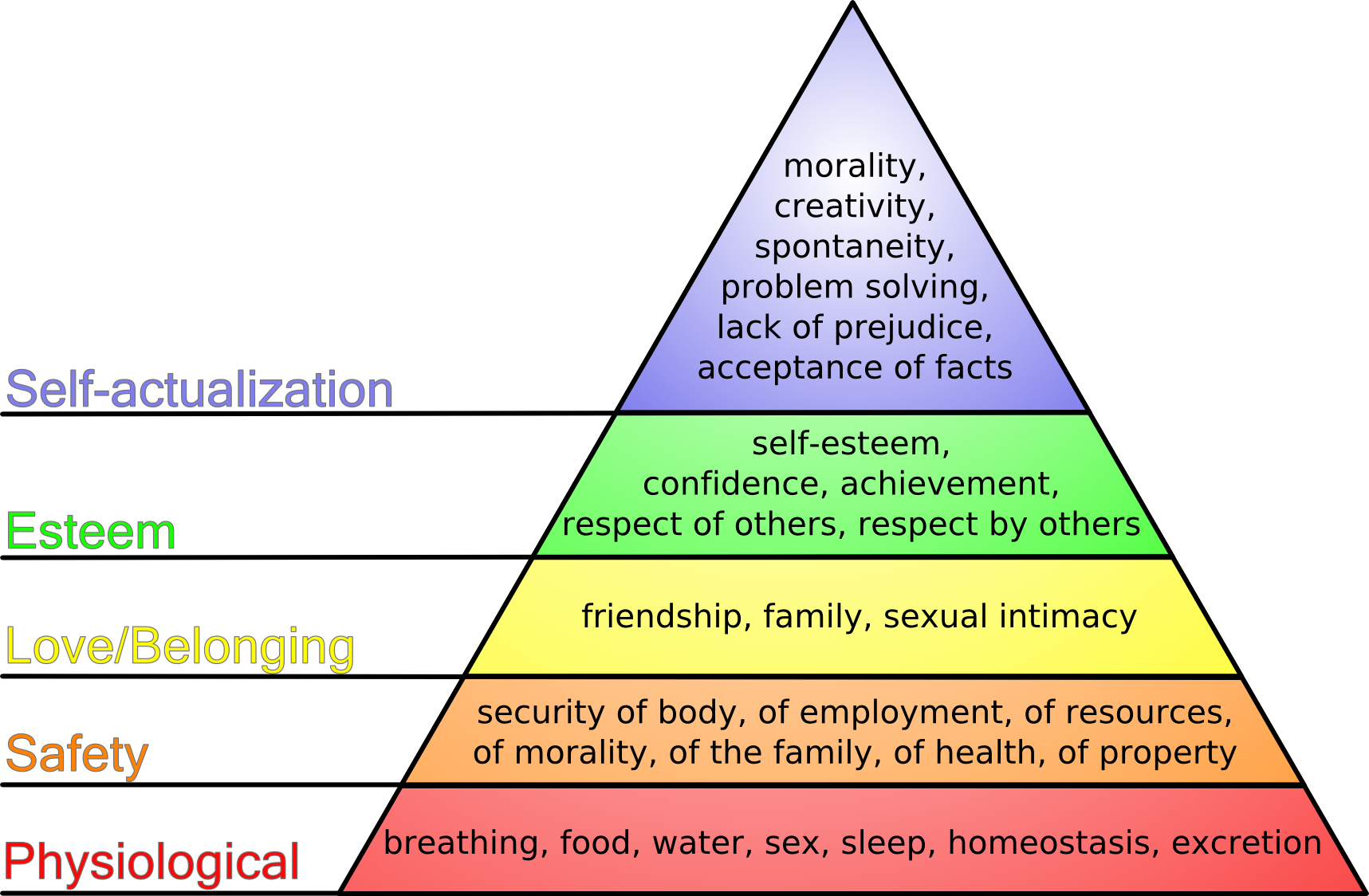
I can't help but think that it has and will continue to play a powerful role in these students lives, and make the Depot into and even more powerful and positive place.
Sunday, March 20, 2016
Awakening from the dream of race
"I would not have you descend into your own dream. I would have you be a conscious citizen of this terrible and beautiful world."
-Ta-Nehisi Coates, Between the World and Me
 I feel like my eyes have been slowly opening over a period of years.
But it's like they're opening in stages, like big shifts of the landscape that open to wider and clearer vistas, and reading Ta-Nehisi Coates' Between the World and Me is the latest instalment in this series of shifts.
This particular shift started a couple of years ago when I first read The Children in Rm. E4, and was blown away by the damage that has been done (and continues to be done) here in my home state of Connecticut by subtly racist laws, rules, policies, and social norms.
The Children in Rm. E4 was a tipping point in my increasing awareness of the true nature of our society and economy. It shattered my belief that the injustices ended in the sixties and shattered my faith in the ability of freer markets to fix the problem. The problem is clearly so deep, so ingrained, so systemic, that it can only be solved at the system level. Collective action is required, because the system is just a reflection of the will of the masses. We created a system of plunder, and as Coates puts it, "Plunder has matured into habit and addiction."
The Children made that clear. Coates drives it home with a vengeance, and to me, his book is a call to action, a call to awaken from what he calls "the dream."
Between the World and Me is his memoir, a heartfelt letter to his son about being black in a world that is living in a dream. It's a letter to his son about growing up in a world where "You have been cast into a race in which the wind is always at your face and the hounds are always at your heels..." while the people "who believe that they are white" are caught up in a dream.
The dream is the delusion that our green lawns, memorial day barbecues, double-wide strollers and suburbs are legitimate--that they are not resting on the backs of human beings. It's the delusion that we live in a meritocracy, where I have earned what I enjoy, when in reality, we "have forgotten the scale of theft that enriched [us] in slavery, the terror that allowed [us] for a century to pilfer the votes, the segregationist policy that gave [us] [our] suburbs."
Throughout the book, Coates paints a poetically painful picture of life in inner city Baltimore in the 80s, where every day, his life was literally on the line, his body threatened, either by rival gangs or the police. He contrasts this life of fear with the secure world of "the dreamers:"
"Some days I would take the train into Manhattan. There was so much money everywhere. Money, flowing out of bistros and cafés... Money, out on West Broadway, where white people spilled out of wine bars with sloshing glasses, and without police. I would see these people at the club, drunken, laughing... They were utterly fearless. I did not understand that until I looked out on the street. That was where I saw white parents pushing double-wide strollers down gentrifying Harlem boulevards in t-shirts and jogging shorts, or I saw them lost in conversations with each other, mother and father, while their sons commanded entire side-walks with their tricycles. The galaxy belonged to them, and as terror was communicated to our children, I saw mastery communicated to theirs."Mastery. "In the dream," writes Coates, we dreamers are "Buck Rogers, Prince Aragorn, an entire race of Skywalkers." But in reality, we are plunderers: "To awaken them is to reveal that they are an empire of humans, and like all empires of humans, are built on the destruction of the body. It is to stain their nobility, to make them vulnerable, fallible, breakable humans."
According to Oppenheimer's classic account of the rise of governments, The State, the "noble" class is always made up of the descendants of a conquering tribe or nation, and they always create some religious or moral justification of their superiority and right to rule. But there is no such right. We're all just humans. So why is there still empire?
It didn't end with the civil war, and it's not just in the South. Ta-Nehisi tells the story of an incident in the subway, when a white woman pushed his son, a white man came to her aid, he sensed their sense of superiority, and all of the hurt and history of a childhood of northern oppression welled up inside him and exploded like a volcano. I won't quote it here, because it's worth the price of the book--it's such a lucid and emotionally raw demonstration of the continuing existence of empire.
That anyone would feel as he did is an indictment of us all, yet the dream is powerfully seductive. It seduces us to to turn away from the injustice of Trayvon Martin, Eric Garner, from the moral disaster of the projects, and the Children of Room E4, in what Coates calls "silent acquiescence." Waking up would force us to admit our guilt and would threaten our own security. If we stop denying that this is empire, if we acknowledge the continuing injustices of the system that keep us privileged in our picnics and suburbs, if we disassemble the apparatus that maintains it, what will happen? Will history turn on us as it did them? Will we lose our security and prosperity?
So what?
The dream is an intoxication. It protects us from the rawness and pain, but also from the justice and authenticity of reality. As Carl Sagan put it, "For me, it is far better to grasp the Universe as it really is than to persist in delusion, however satisfying and reassuring." If my security comes at others' expense, I'd rather have uncertainty.
It is high time the world came face to face with the oppressive modus operandi of the modern human race. I'm convinced its not in our DNA. Violence and oppression is not a gene, just a meme, and if we want security, there are far better sources than conquest and empire.
There's cooperation and community.
There's recognizing our intertwined lives--we are all connected.
Instead of clinging to boundaries of family, place, and nation, we can embrace the reality that we are all family, one human race, and one world community. Instead of believing in race--whiteness and blackness, we can believe in humanness.
Instead of building walls, we can tear them down.
Instead of turning away, denying and pretending, we can wake up.
But what will that look like? What would it look like if I did that?
I can admit that I am the recipient of privilege and benefits that have come down to me from empire, but what can one man do against an empire? As Coates wrote to his son:
"I do not believe that we can stop them, Samari, because they must ultimately stop themselves, and still I urge you to struggle. Struggle for the memory of your ancestors, struggle for wisdom.. but do not struggle for the dreamers. Hope for them, pray for them if you are so moved, but do not pin your struggle on their conversion. The dreamers will have to learn to struggle for themselves, to understand that the field for their dream, the stage where they have painted themselves white is the deathbed for us all."But I can't help being an optimist. I can't help but think that I can do something--that we can do something. I can't help but think that it has to start somewhere--with me and you, with justice in our own little spheres.
For me, that means starting with education that doesn't oppress, but empowers and equalizes.
Now, the only question is, how?
Saturday, March 12, 2016
Me, Gramps, Brooklyn, and the boundaries of family and place

When a native Mississippian asked, "Where are you from?," he didn't mean "Where have you most recently lived?" He didn't even mean, "Where were you born?" He meant, "What town are your ancestors from?"
Their sense of place blew me away, but it also resonated with me. I grew up in the woods and hills of a small town called Brooklyn, Connecticut, tucked into the northeast corner of the tiny state, right in the heart of "Swamp Yankee" country. As far as I knew, that was my nationality--Swamp Yankee, because that's what my grandpa Green always said when we asked him what nationality we were.
He had grown up in Canterbury, a town just south of us, and moved to Brooklyn as a young newly-wed. He cleared the pines on this hill in big valley of the Quinebaug River, and started raising dairy cows on its sandy glacial soil. His love of the land was so much a part of him that he spent most of his free time, after he retired from a career in politics, working it, clearing it, and tending it. He dug a big pond out back, the one that Long Brook runs through and locals fish in.
But back then it was a rough start for he and my grandmother. Stories tell of the two of them driving a car without a wind shield and sawing wood in their living room in order to make ends meet in the early days. I have often imagined grandma in her kitchen, after her morning milking duties, serving up what she called "flap jacks" to a crew of a dozen or more children, farm hands, and foster kids. It's easy to imagine, because she did the same for us, my dozen or so cousins, brother, sisters and me, later on.
Grandma and Grandpa came from a very different time. A great aunt on Grandpa's side, who hunted and cut wood well into her 70s, told me stories of growing up on that Canterbury farm. She told me how my ancestors made apple liquor called "rot gut," in their still, steam billowing out the door of the shed. They hid the bottles behind the seat of the car in order to deliver it to a local funeral home, where it was sold in secret during the days of the Prohibition.
This is where I'm from, and it became a part of me as I grew up and worked weekends and afternoons for the family business. The dairy had morphed into a construction business that thrived for decades, and I spent my childhood digging trenches, sweeping floors, spreading loam, planting grass, and washing trucks. I can still here my grandfather saying, "If you're gonna do something, do it right," and I can still see him inspecting his car after I washed it, in his old, worn shoes and work shirt. I have him and my dad and uncles to thank for the work ethic that is rooted so deeply into my bones.
This place and these people became a part of me as I spent holidays with so many aunts, uncles, and cousins I have trouble counting them, shooting dart guns at each other, playing tag, sledding, riding snowmobiles, Big Wheels and bikes.
It became ingrained in my soul as I walked in the woods every day, setting crude animal traps, building shelters, making pine tea, camping, dipping my hands into sand springs and soaking up the earth and life around me.
It all became such a part of me that I could never separate myself from it for long. I identified so strongly with it that it always pulled me back. After spending 5 years away in graduate school, I felt that magnetism again and returned for good in 1998, dragging my patient wife back here with me. I'm glad she hasn't felt as strong a pull as I have toward her place in central Illinois and her memories of walking beans, raising sheep, and helping with the corn harvest.
Our kids were young when I was at college in Illinois and Mississippi, and my daughter's cute little southern accent didn't last long after we returned north. Now, I think, this place is almost as much a part of them as it is of me. It's been such a privilege to be able to raise them with this kind of stability.
I wonder what it would be like not to have this sense of place--this physical identity with the land and people. It seems very primal and natural--a close-knit people tied to a place with it's plants, soils and geology. I'm grateful for it, and that I could raise my kids with it.
But I know I'm lucky. I know there are millions born into millions of little Hells-on-earth, and I was lucky enough to be born into a little Eden. I just started listening to Ta-Nehisi Coates' Between the World and Me. My childhood was far from perfect and painless, but it was heaven compared with his, and there are millions who make his look like a paradise. For them, their sense of place, the culture of their childhood is more a source of pain and poison than security and strength.
And then I wonder what will happen as more and more people are displaced, living increasingly mobile lives, increasingly removed from family and homeland. Can we replace physical places with digital ones and biological families with virtual ones?
Or will it just mean adjusting to the reality that we are all family, and that the whole earth is our home? Because, after all, that's the truth. Being human means belonging to something bigger than yourself--the whole human race and the whole earth. I love what Neil deGrasse Tyson said in an interview a little while ago:
"We are all genetically related, every human being. Any two humans on Earth have a common ancestor if you go back far enough in the family tree. So the fact that you draw a circle this big around family and say 'That's my family and outside the circle it's not'--that's an arbitrary circle. That's biologically arbitrary. You've decided for yourself that inside the circle's my family, outside it's not, when we have genetic links among all human beings."I wonder what the world would be like if we could all draw our circles larger? What if I could develop the same attachment, the same sense of identity with the whole Earth and human race that I have with my family and place here in Brooklyn?
I may have been born into a family of Swamp Yankees in the Quinebaug Valley, but I could just as easily have been born in the ghetto or worse. And more than that, this circle of family really is arbitrary, as are these boundaries of town and state and country. I really am related to everyone, and I really don't belong to this piece of land any more than any other.
I picked up pieces of Illinois and Mississipi along the way, and 15 years as a teacher in Mansfield has changed me more than I could have imagined. I am a work in progress, an amalgam of every person and place I've spent significant time with, worked with, related to. Our lives are intertwined.
It's exciting to think of the potential for absorbing pieces of other places and peoples, broadening our "circles." That's what I liked so much about Ramez Naam's awesome book, Nexus, in which he envisioned a drug that could connect people's minds, breaking down the ultimate barrier between people.
As important as family and village and tribe are, we need to somehow move those boundaries and circles out until they encompass it all. Though I am thankful for all my ancestors and homeland instilled in me, I am a citizen of Earth and a member of the human family.
That's also where I'm from.
Saturday, January 30, 2016
A beautiful day at a different kind of school

The student kitchen crew ran like clockwork. They must have set a new personal speed record serving up their popular Texas-sized French toast.
After breakfast, we gathered in the Communtiy Room for "Pick-me-Up," a daily whole-school lesson. Not everyone was engaged in Part 3 of my lesson on "Community/Human Ecology," but most were busy offering up examples of win-win, win-lose, and lose-lose situations in human relationships--answering the questions on the slides, like:
Which is better?
A) You gain, your competitor losesIt was interesting to see them apply this to how they played the "prisoner's dilemma" game two weeks ago and whether they played with a win-win or lose-lose strategy. It stirred up some emotions.
B) You both lose
C) You both gain
And I'm pretty happy with the little poem/rap we started it all off with:
Ecology:We're digging deep here--asking questions that get to the heart of what it means to be human and live in a community, and I'm psyched to continue this lesson by exploring "The Chimpanzee and our family tree"--a lesson in human origins and what it means for human relationships.
that branch of biology
that’s about the dependency
of one living entity
on just about every
living thing,
either productively
or destructively,
in animosity
or harmony.
After Pick-Me-Up, a student was in my office for one-on-one support and quiet study, part of our new Tier 2 support system at the Depot. He was focused, productive, wrote some amazing things, and completed an assignment that he'd been stuck on for months.

Later, it was just as powerful to sit with our two psychology and counselling interns and talk about their work with our students. Many of our students struggle with the effects of very difficult histories and home lives, and the compassion and professionalism of these two people is awesome. It reminded me of Geoffrey Canada's approach of doing "whatever it takes" to make sure kids succeed.
After lunch we have "Book Teams." In my group, we're reading Ender's Game (love that book--Ender is so hard core). We share our thoughts after every chapter of silent reading.
Then comes the read aloud. For that, we're reading Arthurian legend--very challenging to read, with awkward, old-fashioned words and sentence structures. I told the group that we are going to approach this like CrossFit. It's tough stuff, so we'll scale the "workouts" until they can handle them--they can read aloud a sentence or a page, depending on how difficult it is for them, but they all have to read something as we pass the book around.

Shannon, one of our advisors, wrapped up the day with her weekly "Kick-Me-Out" presentation. Students gave each other "shout-outs" and then reflected on what they were doing in the pictures of the week's activities that flashed across the screen and anonymous quotes of their classmates, like "My internship is the best thing that's ever happened to me." We ended by watching this cool video of one human making another very happy (definitely worth a few minutes if you haven't seen it).
Maybe this smoothly-running and awesome day was just a fluke, but I'm hopeful. I'm hopeful it's the fruit of our increased structure and support. And I'm hopeful that as we continue to build strong support structures, we can increase the productivity and harmony of this little community.
Thursday, December 24, 2015
Hugs like light through stormclouds

But just as frequently, light breaks through the clouds.
Like the excitement of one struggling young person who landed his first internship last week, and another young lady whose internship just turned into a job at a law firm.
There's the growing confidence of a young man whose challenging technology project is finally getting off the ground, and the excitement and pride of a young man who came to tell me about his new, higher SAT scores.
There's the excitement among the staff as we plan new supports for students.
There's the generosity of a young lady who baked twelve dozen cookies for everyone, and the seven students who worked all morning yesterday cooking a delicious ham dinner for the whole school.
There are the smiles on faces that haven't seen many smiles lately, as they picked out an unwrapped gift during the Yankee swap.
And there are the courageous young women who sang impromptu songs for our open mic.
But the brightest light this week came from one powerful young man whose courage and compassion just blew me away. The past month has been just one painful blow after another for him, and on top of all that, a friend at the school has been seething with anger towards him for a week. So he decided to do something about it.
First, he approached his angry friend and tried to initiate a conversation: "Hey, man, we have to talk about this.." he began, and then explained his side of the story.
There was no response to this initial effort: the other student just turned away. But that wasn't the end of it. Later that day, as the angry student was sitting for the Yankee swap, this powerful young man approached him again. He came up behind him, and I heard him say something like, "I may get punched in the face for this hug, but I'm doing it anyway."
Then he wrapped his arms around this angry student, and that frown that had been there all week just... broke. It broke into a smile, though this angry kid tried to fight it. That bear hug broke through that anger like a the sun through storm clouds.
Thank you, young man, for reminding me what it's all about--what being human is all about.
Saturday, October 3, 2015
Family, radical acceptance, and embracing failure: Week 5 at the Depot

There's an image in my head from this week: two students huddled around a third who came to school seriously out-of-sorts. They're all squatting on the ground trying to find out what's wrong, looks of genuine concern on their faces.
And there are other pictures: images of a radical kind of acceptance many of the students have for their peers who may have poor hygiene or other issues that might make others steer clear. It's a kind of love that doesn't even seem to notice, but embraces them and seems to understand. I'm guessing it comes from having gone through excruciating struggles in their own lives.
I was feeling irritated with one student who came in with a seriously bad attitude one day this week, until another student explained, as if to defend him, that "he was just grumpy because he was tired." It may seem silly or naive, but it fits with Chip and Dan Heath's powerful principle from Switch: What looks like laziness is often exhaustion.
I didn't get to that part of my pick-me-up talk Friday morning, but it was a slide I needed to remind myself of this week: When dealing with people...
1. Assume the best.
2. Seek to understand.
3. Have the conversation.
4. Compromise.
Yep, our "family" has it's share of conflicts. The student running up the stairs on the warpath, looking for the one who did not clean up the smoothie jar, was just one instance of the ongoing struggle with messes in the kitchen. But we're all a work in progress. When you're working with people (including yourself), your work is never done. Progress is sometimes slow. It takes relentless, never-give-up effort.
I feel like the kitchen crew could become a really powerful way to teach healthy eating, leadership, science, math, while strengthening our community. Messy counters and piles of dishes in the sink may seem to threaten that dream if we don't expect failure and embrace it as part of the process.

Some of the bumps in the road will come from me. Case in point: I enjoy helping students explore their interests, find their passion, and pursue internships they might like, but I forget that these students have histories, advisors who know them better than I and may have developed other plans with them. It's hard to admit mistakes, and criticism is hard to take, but I need to embrace it, just like failure, just like every other step along the path to a goal. Challenges, effort, patience, failure, acceptance, small wins, joy, relief, fear, exhilaration, disappointment, exhaustion--all steps along the same path.
Every challenge or goal we hash out as a staff, every tough conversation with a student or parent, is a step. I love the steps we are taking toward measuring student mastery, clarifying our roles, building our relationships, and just improving the lives of these kids, and I love becoming a part of this family.
As for more failure? Oh, I know it's coming, but bring it on.
Monday, March 30, 2015
Rough sketch of a better balance
I used to think achievement and creativity were the key to human happiness. I justified this, I guess, because I figured that what made us human was mostly our creative potential--our ability to make the world whatever we wanted it to be, to break through the boundaries of the possible and explore the unknown.
And I still think this is an important aspect of human nature, but I'm realizing it is not the most important--it's just one facet of something a more complex.
For one thing, all this drive for creation, change and exploration and boundary breaking--this ambition--really needs to be interspersed with contentment.
And though we are definitely the most creative of animals, were also among the most social, and so I think I'd add community to creativity.
And closely related to community is compassion.
And then of course there's just pure enjoyment, hedonistic immersion in the moment, fun, and excitement--let's call it captivation.
A more balanced picture might look something like this:

And I still think this is an important aspect of human nature, but I'm realizing it is not the most important--it's just one facet of something a more complex.
For one thing, all this drive for creation, change and exploration and boundary breaking--this ambition--really needs to be interspersed with contentment.
And though we are definitely the most creative of animals, were also among the most social, and so I think I'd add community to creativity.
And closely related to community is compassion.
And then of course there's just pure enjoyment, hedonistic immersion in the moment, fun, and excitement--let's call it captivation.
A more balanced picture might look something like this:
So that's part of going for a better fit, I think--trying to hit all of those every day.
Saturday, February 28, 2015
Schools as open systems

A few things rolling around in my head as a result...
Gerstner's quote: "culture is not part of the game, it is the game."
Too many toxic cultures in schools these days. Maybe it's the result of a constant barrage of mandates from above, or maybe just a blame-game response to the very real challenge of educating our diverse clientèle. Either way, this has got to change, and I love the story in Deal and Peterson of Jefferson High. They brought in a consultant, and one toxic teacher stood up and asked him to leave even before he'd begun. He responded that he was thankful he had the option (implying he was better off than them for that reason). But he stayed, and proceeded to interview every one of them and compile such a dismal picture of the school that they were all forced to face the facts and embrace the need for change. We need a paradigm shift from schools as filters that serve the "good students" to schools as fires that ignite a love for learning in every student.
Deal and Peterson on school-parent relationships: "a school must be... an open system with highly permeable boundaries."
One of my dreams is that the walls of public schools will dissolve and the school will truly become bigger than the building. We live in a truly global community, and it's time our educational system reflected that. Education is not about textbooks and content curricula--it's about being human, and that means being hypersocial animals with a passionate penchant for understanding.
For too long, schools have been like factories. It's high time they became a catalyst for community. And my experience the other day in a Senior Center confirms that the community wants this as badly as we do.
A synthesis coalescing from my two years of study in this program: As a school leader, I need a streamlined system by which students, teachers, parents, and community members can rapidly and easily give me feedback and get involved in the decision-making process.
Which ties back to the above points. In order to build this kind of community, everyone needs to have a voice, and not just a voice, but a say in the decision-making process. Our systems of governance need to evolve with the world. The days of hierarchies and top-down directives belong in the dust heap of history. And today's digital technologies can facilitate this.
Monday, February 23, 2015
Making the school bigger than the building
The two teens stood in front of a small crowd at the senior center, explaining their project to help feed the hungry in the local area, how they'd already raised $6,000, and how they'd be working with Feeding Children Everywhere to assemble 40,000 meal packs at the high school, and how they'd like the seniors to join them. They said there would be lots of fun and music, and that they wanted it to be a whole-community event.
The teens were energized, eloquent, and sincere. The seniors began firing off questions, "Will this be a regular event?," "Will we be able to do it while sitting down?," "Do you have a website?," "Can we donate if we can't make it that day?," "Can we sign up now?," and "Can we choose the music?"
Laughter followed the last one.
The young man replied, "It will be all big band hits."
More laughter.
The organizer of the senior center closed the session saying how excited she was that the high school was excited about intergenerational activites.
And this, I thought, is how you build community through the school.
The teens were energized, eloquent, and sincere. The seniors began firing off questions, "Will this be a regular event?," "Will we be able to do it while sitting down?," "Do you have a website?," "Can we donate if we can't make it that day?," "Can we sign up now?," and "Can we choose the music?"
Laughter followed the last one.
The young man replied, "It will be all big band hits."
More laughter.
The organizer of the senior center closed the session saying how excited she was that the high school was excited about intergenerational activites.
And this, I thought, is how you build community through the school.
Subscribe to:
Posts (Atom)