Showing posts with label culture. Show all posts

Friday, June 15, 2018

The obstacle becomes the path: A short commencement speech

There is an old Zen story about a king whose people had grown soft. He wanted to teach them a lesson, so he put a big rock in the middle of the main path to town, blocking the road. Then he hid in the woods to watch what they did.

One by one they came. Most just complained. Some would try a little to move it, then give up.

Finally, one lone peasant came along. He pushed and pushed at the rock. Tried to get his hands under it and lift. Nothing worked. Then he had an idea. He went into the woods and got a large branch and used it as a lever to move the rock.

Under the rock the king had hid a purse of gold and a note that said: “The obstacle in the path becomes the path. Never forget, within every obstacle is an opportunity to improve our condition.”*

You have all had your share of obstacles in your paths. But you didn’t give up. You found new levers.

And you found new strength.

Don’t forget that.

Don’t forget that there are always other levers, and there will always be new strength.

High school will not be your last obstacle. I can guarantee that.

So remember this lesson. Remember what happened when you didn’t give up.

Remember how the obstacle became your path.

And don’t give up.

I hope that you have also learned a few things about effort--that it’s not easy to move those stones, even with a lever.

But effort pays off with new opportunities.

Now that you’ve graduated, you automatically have multiplied your opportunities.

You can repeat that process of multiplication. Every obstacle you overcome, every challenge you take on will be a multiplier.

Jobs, college, new degrees, new learning, will all multiply your options.

That’s the point. It’s not about gold purses. I think the purse of gold coins was a little lame, actually.

Here’s my version: The guy works and works on the stone until he gets so strong he can move it. He becomes like Hercules. And then he walks to the city and gets a job as the king’s own bodyguard. Or something like that.

Or maybe this version: She moves the stone and finds that the path beyond is not just one path, but a whole bunch of paths to places she hadn’t even dreamed of.

The point is, the obstacle doesn’t become a prize. It becomes a path. A new path.

And here’s the other problem with the story. You’re not alone. You don’t need to move the stone alone. Reach out for help. That guy or girl should have gone and gotten some help with that lever. The story would be just as cool and so would you. Asking for help is not a sign of weakness. It takes guts to ask for help, just like it takes guts to keep pushing at those stones that don’t seem to budge and to go looking for levers.

See, that’s the other benefit to obstacles. They draw us together with other people, and that’s what’s really important in life.

So congratulations Depot Graduates! You moved this stone! And I am excited to see what you find beyond it!

And good luck as you continue on your paths and convert more obstacles into new paths to success.


*Thanks to Ryan Holiday for the Zen story and for his excellent book, The Obstacle Is the Way.

Sunday, July 17, 2016

The power of food: The Depot Kitchen Crew

We made some big changes at the Depot this year. These included some pretty sophisticated heavy hitters, like a new competency rubric, new data tracking tools and new accountability and support structures. But my favorite change is a bit more basic. Primal, even.  It's our new Kitchen Crew.

Throughout the year, students cooked breakfast for the whole school every Friday morning. They made pancakes, bacon and eggs, breakfast burritos, skillets, French toast, and some beautiful yogurt parfaits. But the most important thing to come out of that kitchen wasn't  pancakes, but a sense of ownership, self-esteem and community.

It was exciting to see them in the kitchen, working together, cutting vegetables, turning bacon, flipping French toast, and serving their fellow students over the counter. It was fun to see the line forming, and the students eating together in our little cafeteria.

They even expanded the program themselves to include some soups and salads for lunch.

Did it take some extra time from the day?


Yes. It took a small bite out of instructional time on Friday morning.

Did it take some effort on our part?

Yes. Ellen met with the students weekly, shopped for food, and supervised every Friday morning.

Did it cost money?

Yes, and it was privately funded.

But was it worth it?

Absolutely!

Here are the top three reasons I hope to continue it next year:

First, food sharing is in our DNA. Primates do it all the time to boost oxytocin, forge bonds and build community. This is why we gather for meals... and share pictures of our food on Facebook when we can't.

Our climate survey did not show the positive impact I was hoping for, but there were lots of other things going on this year. Big changes were made, students left, and new students were added. We certainly don't have a controlled experiment, and we have a very small sample size. But we do have evidence of positive impact: consistent, voluntary, enthusiastic involvement of 9 students (half our population) throughout the school year, widespread enjoyment of the breakfasts, and these awesome pictures.

Second, these students are learning to cook and eat wholesome food. OK,  pancakes aren't the healthiest, but they're better than fruit loops, Monster drinks and donuts. Plus, the crew made plenty of salads and soups for lunch as well.

And it worked. Ellen's enthusiasm and vision for the role of healthy food in their lives was contagious. By the end of the year, the teams worked like clockwork, turning out delicious, full breakfasts in half an hour or less.

It even carried over into their home lives. One parent told us her daughter has started cooking meals for them at home as a result of her time on the Kitchen Crew!

Third, these students are taking ownership of their school and finding a place here, and this is a key aspect of a positive school culture. We've seen the pride they're finding in building their gardens this summer, and I think the Kitchen Crew must feel the same way. They played a real role. Some began asking to cook at other times, and lunchtime soup and salad became a regular occurrence. One student even started seeing herself as "the soup lady."

Fourth, in addition to basic cooking skills, they gained practice in leadership, cooperation, and collaboration. It wasn't always smooth sailing down there in the kitchen. They had their share of personality clashes and disagreements over who would cook what and how, and they worked through it all.

Of course, there's also plenty of room for improvement for next year. Here are the top three changes I'm hoping to make:

First, data: I need to figure out a way to test whether or not the program really has the positive effects I hope it will, probably by using our life skills rubric, interviews, and more specific questions on the climate survey.

Second, credit: I didn't assign the students credit for participation this year, but I plan to do so next year, and base it on mastery of competencies.

Third, expand the concept. I want to expand the concept of giving each student a key role at the school. I'm hoping a full time Garden Crew will grow out of our summer garden program, and maybe a Grounds Crew. And I'd love to see a PR Crew make promo videos and stuff!

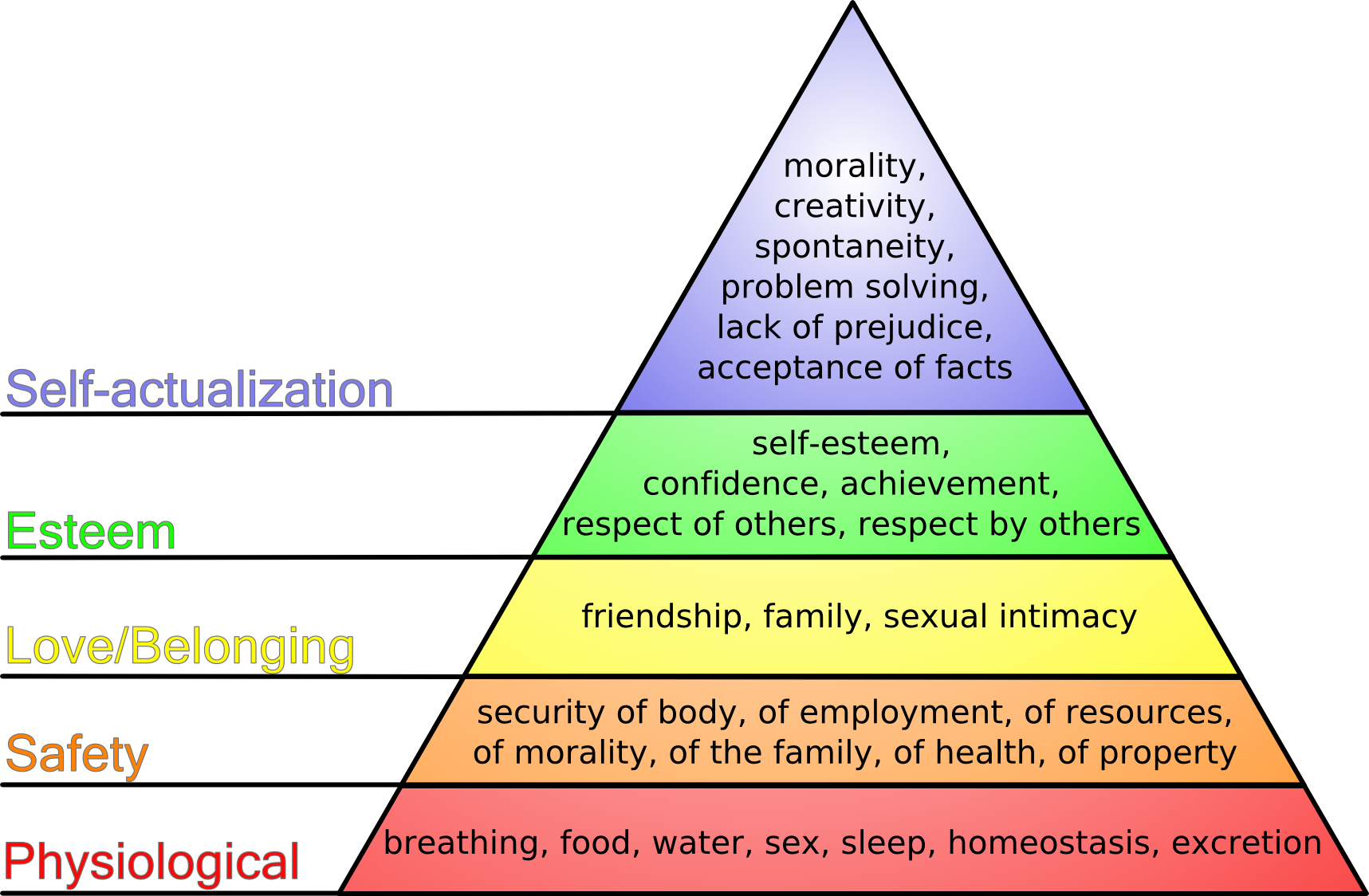
I think all of these would have powerful impacts, but I see the kitchen as always playing a central role. Maybe I'm biased, since this little program is my favorite, but several million years of evolution can't be wrong. Food is not only at the base of Maslow's pyramid, it can be the basis for higher levels as well, creating a sense of belonging, and boosting self-esteem.

I can't help but think that it has and will continue to play a powerful role in these students lives, and make the Depot into and even more powerful and positive place.

Sunday, June 5, 2016

We need a new narrative

Tristan showing off the urn he made at his internship.
What is the Depot? According to one of our students, it's "a place where you go and come back with blue hair and piercings."

That's an interesting description, and it has a grain of truth to it. At least 25% of our students have had colored hair at some point this year. But it is also false. Many of them already had it when they came, and 75% of them never color their hair or pierce their lips.

The problem is that stories like these change the way people see us, and more importantly, the way we see ourselves.

Not that colored hair is a bad thing, and though facial piercings may not help you get a job, that description of the Depot doesn't really bother me. The more common description of the Depot is much more damaging. It goes something like this: "The Depot is a place where you go when you fail."

This is the story we hear over and over again from our own students. It's the story they tell themselves about the Depot and about themselves. It's a story that shapes their beliefs and even their behaviour. And it's not true. And we need a new one.

Just like all cultures, nations, organizations, families and people, the Depot has a story that we tell about ourselves--a story that defines who we are. As Yuval Harari writes it in Sapiens, these stories are part of what makes human societies possible. According to Harari, the ability to make up such stories is what made homo sapiens so much more successful than the other homo species, like the Neanderthals. The stories that make up our religions and national histories bind us together in groups much larger than genes ever could. These stories are powerful, because they provide us with identities, guidance and justification for our actions.

For example, if you believe that humans are descended from peaceful, egalitarian, bonobo-like creatures that had sex freely with any and all members of their group, as suggested by Chris Ryan in Sex at Dawn, this will affect the way you view yourself as a human. It will provide an identity (humans are inherently peaceful, sharing and loving), and it will provide an explanation of why humans have a tendency to cheat on their spouses and why the divorce rate is so high. It will also suggest an answer to the problem.

But it will also fail to fit the data. Lynn Saxon, in her rebuttal of Sex at Dawn, called Sex at Dusk, shreds Ryan's analysis and makes a strong case that humans are naturally monogamous with a natural tendency to cheat on the side when they can. This is what is called the "standard narrative" of human sexual evolution, and it paints a very different picture of who we are and how we should live. Which story you believe will affect the way you view yourself and your world, and could affect your behavior.
The standard narrative of the Depot, that it's a place for students who "don't fit" the traditional model--a place for kids who fail, also has powerful implications. It suggests that there's something wrong with them, which suggests that they behave accordingly.

But what if it's not true? What if the Depot is just a different path to success, one where students can learn from mentors in real-world settings? What if it's a place where all students could thrive? Then we're not the Island of Misfit Toys, and they're not misfits. They're here, not because they are failures, but because we offer something that can help every student succeed, and they made an active choice to help themselves by taking advantage of it.

Just like societies and schools, we all have little stories about ourselves that we tell ourselves. As fantasy author Patrick Rothfuss put it, “It's like everyone tells a story about themselves inside their own head. Always. All the time. That story makes you what you are. We build ourselves out of that story.”


If your story is that you're a failure, victim, or misfit, that's going to shape you, and not in a good way. You may have baggage and challenges you've inherited from your history, but that doesn't have to be your story. Instead, your story can focus on the overcoming and the strengths and positives.

My own negative stories about inadequacy and fear and failure and rejection have hindered me at times throughout my life, and I know I'm not alone. I see my students struggle every day with the stories they tell themselves. Like the stories I tell myself, the standard narrative of the Depot gets propagated because it has elements of truth. Many of our students have failed at the main campus. Many feel they don't fit in. But the story is false. That's not who we are, and it's not what we're about. We need to change our narrative.

The truth is, we are all humans with tremendous potential and resilience, and that's much more encouraging than the fiction. The truth is, we can be what we want to be. We can write our own story.

Sunday, April 3, 2016

Can you tip a school culture?

“Character, then, isn't what we think it is or, rather, what we want it to be. It isn't a stable, easily identifiable set of closely related traits... Character is... dependent, at certain times, on circumstance and context.” 


-Malcolm Gladwell


How is the context of our school influencing what we would call the character of our students?

How many of the negative behaviors we see are the natural, predictable result of the social environment and structure of the school?

Listening to Gladwell's Tipping Point got me thinking about these questions again. He calls it "the power of context," and it reminds me of one of Chip and Dan Heath's powerful principles: "What looks like a people problem is often a situation problem."

Peers, for example, have such a powerful influence on human behavior that Gladwell writes, "A child is better off... living in a troubled family in a good neighborhood than living in a good family in a troubled neighborhood." That's why Geoffrey Canada, founder of the Harlem Children's Zone, figured he had to reach at least 60% of a neighborhood in order for his efforts to have a lasting  impact on kids.

So what happens if you put a bunch of struggling students from tough family backgrounds, with motivation problems, negative experiences with school, and  social/emotional challenges, all together in one class or school?

It's obvious.

And what's the solution? That's also obvious. You make sure you integrate the struggling kids with good peer role models, as many of them as possible.

At the Depot, we're working on this, but I'm also interested in finding other tipping point triggers we could use.

Gladwell argues that the 1980s NYC crime epidemic was actually curbed by scrubbing graffiti from the subway trains and stopping fare-beaters from jumping the turnstiles. These small changes sent "signals" that had a cascading effect throughout the city.

I'm wondering if there are signals we're sending that could be changed or new ones we could send that might help us "tip" the Depot into the higher-expectations, self-motivated environment we're shooting for.

We don't have any graffiti on the walls--we have a beautiful building, but is there disorder, are there little things we could address. Are there ways we could change the structure so the culture would shift? Are there keystone habits, key changes that would have a cascading impact?

Some of our efforts so far this year include:

  • Pushing more kids to take college entrance exams, talking more about college, and taking them on college tours
  • Encouraging fitness and healthy eating with our new "kitchen crew," free smoothie ingredients, and our "fitness challenge"
  • Increased accountability and tracking of student progress with a new competency rubric and Google Drive-based data tracking
  • Clarified expectations and forms for students
  • Increased academic support through our new "Quiet Study and Support Center"
  • Pointing students we can't serve to other environments that can hopefully serve them better

School culture and climate are so key, but they seem to have so much inertia. Gladwell's hypothesis gives me hope that they might be changed more easily than I expect. "Look at the world around you," he writes, "It may seem like an immovable, implacable place. It is not. With the slightest push--in just the right place--it can be tipped."

Saturday, January 30, 2016

A beautiful day at a different kind of school

A beautiful day in the life of the Depot. A picture of digging deep to build a real support structure and real community.

The student kitchen crew ran like clockwork. They must have set a new personal speed record serving up their popular Texas-sized French toast.

After breakfast, we gathered in the Communtiy Room for "Pick-me-Up," a daily whole-school lesson. Not everyone was engaged in Part 3 of my lesson on "Community/Human Ecology," but most were busy offering up examples of win-win, win-lose, and lose-lose situations in human relationships--answering the questions on the slides, like:
Which is better?
A) You gain, your competitor loses
B) You both lose
C) You both gain
It was interesting to see them apply this to how they played the "prisoner's dilemma" game two weeks ago and whether they played with a win-win or lose-lose strategy. It stirred up some emotions.

And I'm pretty happy with the little poem/rap we started it all off with:
Ecology:
that branch of biology
that’s about the dependency
of one living entity
on just about every
living thing,
either productively
or destructively,
in animosity
or harmony.
We're digging deep here--asking questions that get to the heart of what it means to be human and live in a community, and I'm psyched to continue this lesson by exploring "The Chimpanzee and our family tree"--a lesson in human origins and what it means for human relationships.

After Pick-Me-Up, a student was in my office for one-on-one support and quiet study, part of our new Tier 2 support system at the Depot. He was focused, productive, wrote some amazing things, and completed an assignment that he'd been stuck on for months.


At 10:00, I headed down to the kitchen to supervise two kitchen crew members as they cooked a pot of home made ramen for their classmates, complete with fresh ginger and green onions. It was so cool when one of them came up to my office afterwards to offer me a cup. It was worth cheating on my grain-free diet.

Later, it was just as powerful to sit with our two psychology and counselling interns and talk about their work with our students. Many of our students struggle with the effects of very difficult histories and home lives, and the compassion and professionalism of these two people is awesome. It reminded me of Geoffrey Canada's approach of doing "whatever it takes" to make sure kids succeed.

After lunch we have "Book Teams." In my group, we're reading Ender's Game (love that book--Ender is so hard core). We share our thoughts after every chapter of silent reading.

Then comes the read aloud. For that, we're reading Arthurian legend--very challenging to read, with awkward, old-fashioned words and sentence structures. I told the group that we are going to approach this like CrossFit. It's tough stuff, so we'll scale the "workouts" until they can handle them--they can read aloud a sentence or a page, depending on how difficult it is for them, but they all have to read something as we pass the book around.

Next, we transitioned into our weekly "Friday Fitness" block. Students can choose from a variety of activities, including yoga, a hike on a local trail, ping-pong, and Dance Dance Revolution (those last two are new offerings for the winter). It was so beautiful to see these young people having such a good time and getting active. There were smiles on faces that haven't seen a whole lot of smiles lately.

Shannon, one of our advisors, wrapped up the day with her weekly "Kick-Me-Out" presentation. Students gave each other "shout-outs" and then reflected on what they were doing in the pictures of the week's activities that flashed across the screen and anonymous quotes of their classmates, like "My internship is the best thing that's ever happened to me." We ended by watching this cool video of one human making another very happy (definitely worth a few minutes if you haven't seen it).

Maybe this smoothly-running and awesome day was just a fluke, but I'm hopeful. I'm hopeful it's the fruit of our increased structure and support. And I'm hopeful that as we continue to build strong support structures, we can increase the productivity and harmony of this little community.

Saturday, February 28, 2015

Schools as open systems

Spent the day today doing some reading and writing about school culture for my school administration class. Funny, I began by wondering which of my "3 options" I could employ to make the task more tolerable, only to find by this afternoon that I'd inadvertently become interested in it. (Not sure I slipped into flow, but almost.)

A few things rolling around in my head as a result...


Gerstner's quote: "culture is not part of the game, it is the game."

Too many toxic cultures in schools these days. Maybe it's the result of a constant barrage of mandates from above, or maybe just a blame-game response to the very real challenge of educating our diverse clientèle. Either way, this has got to change, and I love the story in Deal and Peterson of Jefferson High. They brought in a consultant, and one toxic teacher stood up and asked him to leave even before he'd begun. He responded that he was thankful he had the option (implying he was better off than them for that reason). But he stayed, and proceeded to interview every one of them and compile such a dismal picture of the school that they were all forced to face the facts and embrace the need for change. We need a paradigm shift from schools as filters that serve the "good students" to schools as fires that ignite a love for learning in every student.


Deal and Peterson on school-parent relationships: "a school must be... an open system with highly permeable boundaries."

One of my dreams is that the walls of public schools will dissolve and the school will truly become bigger than the building. We live in a truly global community, and it's time our educational system reflected that. Education is not about textbooks and content curricula--it's about being human, and that means being hypersocial animals with a passionate penchant for understanding.

For too long, schools have been like factories. It's high time they became a catalyst for community. And my experience the other day in a Senior Center confirms that the community wants this as badly as we do.

A synthesis coalescing from my two years of study in this program: As a school leader, I need a streamlined system by which students, teachers, parents, and community members can rapidly and easily give me feedback and get involved in the decision-making process.

Which ties back to the above points. In order to build this kind of community, everyone needs to have a voice, and not just a voice, but a say in the decision-making process. Our systems of governance need to evolve with the world. The days of hierarchies and top-down directives belong in the dust heap of history. And today's digital technologies can facilitate this.

Thursday, February 5, 2015

Looking in

I had the opportunity last night to see the Looking In Theatre from the Greater Hartford Academy of the Arts.

It was an amazing learning experience. These teens act out bullying and related scenarios experienced every day by high school students, then they sit down and answer questions from the audience, first in character, then as themselves.

As a teacher, parent, and hopefully soon, school administrator, I was captivated. I kicked myself later that I hadn't had my bullet journal on me to take notes during the discussion--it felt like such a gold mine of data. It was great to hear (and see) their perspectives on what it's like to be a teen today and their thoughts on how we could better help them and improve schools.


A few insights stand out in my mind.

One of my colleagues asked the students what they thought of anti-bullying assemblies like the "Names" program, which includes an "open mic" time, when kids tell their stories. This young woman said that they do make a difference. That day everyone is nicer. But then it wears off. "We need to be reminded that there's more to people than what's on the outside."

Isn't that the truth. It's so easy to forget.

And when asked why she was so mean, why she would tell another students she should "just kill herself," one female student answered (in character) that it was how she showed her peers that she was strong, that she could handle anything.

I thought of how I'd read that adolescents are so socially minded that everything revolves around their social status, and only as they mature are they able to place things in proper perspective. This is what one young lady last night called "growing up."

For many high schools, the self is so tied up with that of their peers, it is hard to see things properly.

But at  The Greater Hartford Academy of the Arts, these students feel accepted. Maybe it's because the school attracts more accepting kids, or because the cosmopolitan environment frees them from cliques and normal peer pressures forces them to be open and accepting. Or maybe, as one student suggested, it's because kids simply want to be there--want to be learning about things they care about, so they are not all set on edge by constantly being forced to do things they don't want to do.

Whatever the case, I think we need to focus in on these bright spots, like the Names program and accepting school cultures and climates like The Greater Hartford Academy of the Arts, and try to replicate them throughout the year and across schools. Then, maybe we can really help.