Showing posts with label #competencyed. Show all posts

Tuesday, February 26, 2019

Why grit is situational and what we should really be focusing on

Picture this: An Agricultural Education student can't get his mower started. He's been taught a troubleshooting procedure, but instead of going through it on his own, he gets off the mower, walks over to the teacher, and asks for help.

The other day, some colleagues and I were talking about the concept of "grit," and this student was one of our examples of a lack of grit.

We extended our discussion to other classes, and one teacher brought up an example of another student who did the same thing in biology class--asking for an answer before even trying to find the answer on his own.

But then another Agriculture teacher in our group spoke up, "I know that student you are talking about, and in my Ag class, that student never asks for help. He troubleshoots the tractors on his own all the time."

In Ag, he shows grit, but in biology class, this student gives up before he even tries. And so it occurred to us: Grit is situational. A student who shows grit in one class may not show it in another class. When he or she feels confident, he or she shows grit. When he or she lacks the skills or experience, he or she does not show grit. Could it be that simple? Could the grit concept be that wrong?

We certainly aren't the first to question the concept. In a recent peer-reviewed article, What shall we do about grit? A critical review of what we know and what we don't know, Marcus Crede writes that there are several major problems with the grit concept:

  1. Grit is supposed to be a combination of perseverance and passion, but evidence suggests it's is just another word for contentiousness, one of the well studied "Big 5" personality traits.
  2. Grit is supposed to be strongly correlated with student performance and success, but there are actually other factors that show much better correlation, such as test scores and cognitive ability. In fact, if you control for conscientiousness, grit shows almost no effect. 
  3. Interventions to improve grit are questionable, since efforts to improve conscientiousness have only small effects.
So where does that leave us? Maybe it leaves us with plain old quality instruction in skills that build competence and confidence. Competence and confidence that will manifest as grit.

Monday, February 25, 2019

Tribal Councils: Our protocol for deliberative discussions

One of the hallmarks of our program here at the Depot has been our emphasis on student-student interaction and collaboration, but this can be challenging. Many teens are insecure and self-conscious and so focused on peer approval that it is hard for them to open themselves to criticism and judgement. But our goal is to develop a culture where they feel free and confident to take those risks and where they have the necessary skills to engage in productive and genuine conversations. We also want to create a democratic environment where students are genuinely involved in decision-making at the school.

That's why we have Tribal Councils. In Tribal Councils, students are presented with an issue or problem and then follow a protocol for deliberative discussion and consensus building. Past issues we have discussed have included out CHIPS incentive system and Project Block, and today we used the protocol to discuss our cell phone policy.

We started last week with a jigsaw-style look at an article about the impact of cell phones and screen time on mental health. Then this morning we started our deliberative discussion. Here's the protocol:

  1. Write down your ideas, with reasons or evidence (5 min)
  2. Go around your table. Each person shares his/her idea, with reasons/evidence. (5 min)
  3. Go around again, responding to your table mates and/or revising your idea in response to their ideas. (5 min)
  4. Go around again, responding to your table mates and/or revising your idea in response to their ideas.  (5 min)
  5. Repeat until your table has a plan that everyone at the table agrees on.  (5 min)
  6. We repeat the same process for the whole room:
    1. Each table shares out.  (5 min)
    2. Each table discusses other tables ideas, responding and revising.  (5 min)
    3. Then we go around the room again.  (5 min)

The goal of the process is that every student has a voice and that eventually we (hopefully) come to some consensus. It generally works pretty well. Today, we did not finish step 6, but we gathered some interesting (and varied) ideas. A couple of tables focused on enforcement and punishment while another focused on incentive and reward, for example. Our goal is to continue the discussion so that we can develop a plan. My hope is that they will settle on doing some "phone-free-days," but we'll see.

In any case, it gets them all talking to each other, and because they know that we always implement at least part of what they come up with, I hope they feel empowered. And I hope they are building the skills they need to make their families, workplaces and communities more collaborative and democratic.

Saturday, June 3, 2017

It's good to be wrong

Depot students having a blast during fitness block.
"I feel like you treat us like delinquents. I feel like we're always being watched with suspicion."

We were sitting around the table, having a little conference. I had been sensing some negative vibes lately between the students and me, and so I called some of them together. The student who just spoke had been quiet, but he drummed up his courage and got right to the heart of the matter.

I was glad he did, because it's good to be wrong. That is, it's good to know you're wrong, because then you can change.

There had been several recent disciplinary incidents, and I had responded by taking away some privileges. On top of that, this year we've vastly increased accountability at the Depot. We added the CHIPS incentive system, ALEKS math block, competency ratings and progress tracking, and careful credit accounting. All this came together to generate lots of stress and negativity. The kids in the meeting had also complained about the Chips and how some students may not be able to go on the outing to Lake Compounce.

As I listened to what they had to say that day, I knew they were right. I knew the importance of focusing on support--that accountability is a poor driver of improvement, but I had lost focus. We had increased support along with the increased standards, but it wasn't enough, and according to our recent school climate survey, compared to last year at this time, more students felt like we don't care.

Time for a course correction. As Brian Tracy says, an airliner is almost never heading straight for it's destination. It's constantly correcting its course. It's constantly wrong, but the pilots know it, and they constantly adjust.

So I reinstated the privileges I had taken away. I reduced the Chips requirement for the latest reward outing, and finally, I made it easier to get math credit through the ALEKS system.

This last adjustment was the result of me looking more closely, after that little conference, at the sources of stress on the kids. I suspected that a few of the behavioral incidents and the slow accumulation of reward Chips were actually due to kids struggling with their math. They were nearing the end of their courses, and only the most difficult topics were left.

It may be coincidence, but since I adjusted the ALEKS requirements, there has been a notable change in behavior and attitude among a few of the students I had been concerned about, and spirits, in general, have been higher since the changes.

Lesson learned.

Being wrong is good stuff.

Wednesday, December 28, 2016

The procrastination equation: Putting research into practice at the Depot

They were discussing different forms of government, and the conversation had degenerated into a frustrating chorus of "There is no right answer. It's all just a matter of opinion."

"That's not true," I said, trying to keep the frustration out of my voice. "There are benchmarks. Some forms of government work better than others."

I'm not sure they got my point, but that kind of relativism is one of my pet peeves. Unfortunately, it infects many parts of society, including education. People in education often think that there are no real answers--no reference points by which to judge between the myriad of models and practices that promise to improve student success. But that's not true. Research has shown what works. The same science that brought us modern medicine and discovered global warming can help us educate our kids, and if we're not using it, we're fighting this battle blindfolded. Here's the story of how we're putting research into practice at the Depot, and how it's impacting our kids.

Last year was my first year at this little non-traditional school, and it soon became obvious that motivation was a serious problem. Motivation was low, engagement was low, attendance was low, task completion was low, and procrastination was high. Then I came across this article on procrastination from psychologist, Piers Steel. It was a thorough review of research related to motivation, and his "procrastination equation" became my guide. I took the liberty here to make it a bit more user friendly:


Utility is "how desirable a task or choice is for an individual." Expectancy is whether we think we will be able to complete the task, value is how much we value the outcome, the more impulsive among us will have a greater tendency to procrastinate, and the further away the deadline (the greater the delay), the more we'll put off the work.

Using the equation is simple. If utility is low, we procrastinate. To decrease procrastination, we need to increase expectancy and value and decrease impulsivity and delay. At the Depot this year, we're attacking all four factors of the equation.

Expectancy: According to Stanford psychologist Albert Bandura, "efficacy expectancy is somewhat susceptible to verbal persuasion and emotional arousal but is especially influenced by modelling and actual performance accomplishments." With this in mind, we are increasing our use of explicit instruction at the Depot, and our new Project Block is designed to provide students with a string of small successes to build upon. As of last week, about 60% of our students had completed 8 science projects, including hands-on projects, lab reports and a research paper, and had begun their first independent project.

Focused work during Project Block
The ALEKS online math system, which we also started using this year, is another way we're building self-efficacy. It offers a mastery-based approach the kids love, and our students' average progress on their courses is 54%.

And finally, we've really ramped up the 1:1 support this year. With a combination of interns and an instructional assistant, we are able to assign struggling students one-on-one help during ALEKS, Project Block, and any other time they need it.

Value: Dr. Steel points to classical conditioning as one way to increase the value factor. During our summer program, we were having trouble getting kids to do their online math work, so I was tossing around the idea of a token-based incentive system with Ellen. I had planned to make the tokens worth credits. "But what if they don't care about credits?," she asked. 

She was right. Many of our students don't seem to be motivated by threats of credit loss or offers of credit. So what did we do? We still offered credit, but we also tied the tokens to a field trip reward, and it worked. They really valued that reward!

We carried that same approach over into this year: Students earn poker chips for on-task behavior, and if they earn enough, they qualify for special field trips. Many students use our new progress tracking system to keep track of their chips and they value them so much that their anxiety about the chips has actually become a bit of a problem. My hope is that this system will build the habits of work that we adults call intrinsic motivation. According to Steel, this is exactly what happens--students associate reward with the work, and the work becomes intrinsically rewarding.

(Of course, they don't always succeed. The other day, I told a student he would not have enough chips to qualify for the field trip the next day. He pushed his few chips away on the table as if to disavow them and said, "I don't want any more chips!" His protest reminded me of my son when he was young. He wouldn't eat his Thanksgiving dinner, and the consequence was not getting any pie. "I don't like pie!," he repeated, as he marched around the table. The fact that chips can tap into their emotion is testimony that we've tapped into the value factor.)

Impulsivity:  Impulsivity is considered a personality trait, and Steel questions whether we can influence it much, but he does suggest two possibilities: stimulus control and automaticity. "Stimulus control," says Steel, "helps to direct behavior by indicating what is appropriate (i.e., rewarding) under any given circumstance," and I think the chips serve this purpose also. If students stay off their phones and on-task for 10, 15, or 20 minutes (we gradually increase the blocks of time), they receive reward chips. Most students earn the full amount of chips available during ALEKS Block and Project Block, and it's surprising to see how easily most of them can focus for 20 solid minutes under these conditions.

To increase automaticity, Steel recommends schedules and routines. This year we've implemented a new blocked schedule at the Depot, but there's more we could do with routines within the blocks themselves. Interestingly, Steel also mentions reducing choice as a means of helping those with high impulsivity. I think the blocked schedule has also helped here, especially the replacement of "self-directed learning time" with Project Block, but I'm still chewing on this one.

We've also added another research-based strategy to the mix to try to address the impulsivity factor--one that Steel didn't mention. Stephen, one of our teachers, has been teaching mindfulness during morning pick-me-up since the beginning of the year. They've gone over several techniques, from focusing on the breath to mindful eating, and they had a great time identifying thoughts and feeling invoked by popular songs the other day. Several students have said they have started to practice meditation on their own. Our hope is that this will help them not only manage stress but also increase focus.

Delay: Our new progress tracking system is designed to give students continuous, rapid feedback about their progress, and the timed chip blocks have provided small chunked goals for the students, but I think we can help students a lot more with handling delays. My goal for the second semester is to explicitly teach the students two methods of time/project management, and then reward them for each box checked off their to-do lists. (Hat tip to Elizabeth Brott Beese, a Ph.D. student from Purdue who spent some time studying our program, for pointing me in this direction.)

That is how we're using science to help our students. That's our goal, anyway, and so far it seems to be working. Engagement is up, attendance is up, and even task completion seems to be up. I was so excited to find Steel's article last year. It has provided a framework--a science-based guide for improving our program. So often in education, we bounce from one model to another, often without much confidence that any of it will work. But there's no need for that. There is a research base in psychology and education that we can use and build on. We're not blind, we don't stumble in the dark, and we don't have to reinvent the wheel. We can't afford to. Time is precious for every one of our students.

Sunday, November 20, 2016

Tracking student progress in a mastery-based system


"She won't be happy until her progress report is 100% green." That's what one of our teachers told me about one particularly driven student. She was talking about our new Google Drive-based progress report system.

One of the challenges of mastery-based learning is tracking and reporting student progress. Our new system allows students, parents, and teachers to see it all at a glance, so students can get the support they need, see their growth over time, and get quick feedback.

At The Depot, we measure student progress toward mastery of six competencies: Communication, Information, Media, and Technology, Career Skills, Life Skills, Critical Thinking, and Creativity and Innovation.

They work on these skills in various blocks during the school day: Pick-me-up, Advisory, Math Block, Book Teams, Project Block, and Fitness, and at their internships.

Teachers rate student performance on the six competencies using our Competency Rubric, and then enter the data in a spreadsheet like this:


A separate "progress report" spreadsheet for each student reports the data out to students, teachers, and parents, like this:


They see a graph of their progress toward each competency, plus a color-coded matrix that indicates their progress by subject area and block. It also reports attendance, credit issues and their accumulated "chips" (a new incentive system we are using this year). Red and orange squares indicate areas of concern. Yellow shows emerging growth, and green indicates competency.

The system also shows progress on a standard sequence of required tasks (the "non-negotiables"), their current credit status, and a worksheet that shows where their subject area credit is coming from this year. 

The system allows us to better identify students who need specific supports, and we are seeing increased use of the progress reports by parents and students. Our hope is that they will find it not only useful, but also motivating, as they see their growth over time. Our end goal, after all, is not only competency, but self-confidence.

Sunday, July 17, 2016

The power of food: The Depot Kitchen Crew

We made some big changes at the Depot this year. These included some pretty sophisticated heavy hitters, like a new competency rubric, new data tracking tools and new accountability and support structures. But my favorite change is a bit more basic. Primal, even.  It's our new Kitchen Crew.

Throughout the year, students cooked breakfast for the whole school every Friday morning. They made pancakes, bacon and eggs, breakfast burritos, skillets, French toast, and some beautiful yogurt parfaits. But the most important thing to come out of that kitchen wasn't  pancakes, but a sense of ownership, self-esteem and community.

It was exciting to see them in the kitchen, working together, cutting vegetables, turning bacon, flipping French toast, and serving their fellow students over the counter. It was fun to see the line forming, and the students eating together in our little cafeteria.

They even expanded the program themselves to include some soups and salads for lunch.

Did it take some extra time from the day?


Yes. It took a small bite out of instructional time on Friday morning.

Did it take some effort on our part?

Yes. Ellen met with the students weekly, shopped for food, and supervised every Friday morning.

Did it cost money?

Yes, and it was privately funded.

But was it worth it?

Absolutely!

Here are the top three reasons I hope to continue it next year:

First, food sharing is in our DNA. Primates do it all the time to boost oxytocin, forge bonds and build community. This is why we gather for meals... and share pictures of our food on Facebook when we can't.

Our climate survey did not show the positive impact I was hoping for, but there were lots of other things going on this year. Big changes were made, students left, and new students were added. We certainly don't have a controlled experiment, and we have a very small sample size. But we do have evidence of positive impact: consistent, voluntary, enthusiastic involvement of 9 students (half our population) throughout the school year, widespread enjoyment of the breakfasts, and these awesome pictures.

Second, these students are learning to cook and eat wholesome food. OK,  pancakes aren't the healthiest, but they're better than fruit loops, Monster drinks and donuts. Plus, the crew made plenty of salads and soups for lunch as well.

And it worked. Ellen's enthusiasm and vision for the role of healthy food in their lives was contagious. By the end of the year, the teams worked like clockwork, turning out delicious, full breakfasts in half an hour or less.

It even carried over into their home lives. One parent told us her daughter has started cooking meals for them at home as a result of her time on the Kitchen Crew!

Third, these students are taking ownership of their school and finding a place here, and this is a key aspect of a positive school culture. We've seen the pride they're finding in building their gardens this summer, and I think the Kitchen Crew must feel the same way. They played a real role. Some began asking to cook at other times, and lunchtime soup and salad became a regular occurrence. One student even started seeing herself as "the soup lady."

Fourth, in addition to basic cooking skills, they gained practice in leadership, cooperation, and collaboration. It wasn't always smooth sailing down there in the kitchen. They had their share of personality clashes and disagreements over who would cook what and how, and they worked through it all.

Of course, there's also plenty of room for improvement for next year. Here are the top three changes I'm hoping to make:

First, data: I need to figure out a way to test whether or not the program really has the positive effects I hope it will, probably by using our life skills rubric, interviews, and more specific questions on the climate survey.

Second, credit: I didn't assign the students credit for participation this year, but I plan to do so next year, and base it on mastery of competencies.

Third, expand the concept. I want to expand the concept of giving each student a key role at the school. I'm hoping a full time Garden Crew will grow out of our summer garden program, and maybe a Grounds Crew. And I'd love to see a PR Crew make promo videos and stuff!

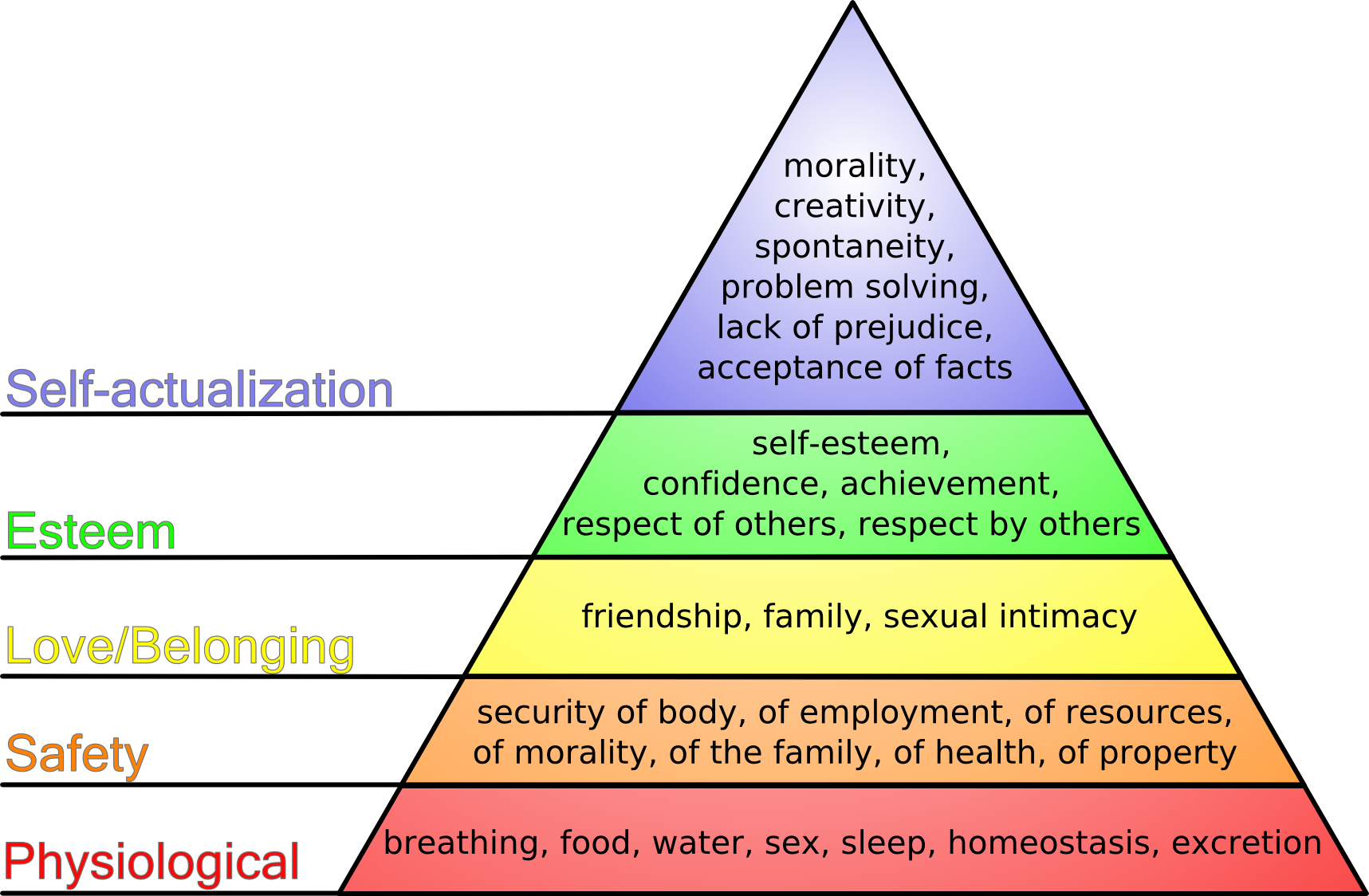
I think all of these would have powerful impacts, but I see the kitchen as always playing a central role. Maybe I'm biased, since this little program is my favorite, but several million years of evolution can't be wrong. Food is not only at the base of Maslow's pyramid, it can be the basis for higher levels as well, creating a sense of belonging, and boosting self-esteem.

I can't help but think that it has and will continue to play a powerful role in these students lives, and make the Depot into and even more powerful and positive place.

Sunday, March 6, 2016

What happens when you set students free to learn?

Three times per year, our students present what they've been learning to a panel of parents, peers, and teachers, and I get to sit in on every one. They are called Exhibitions, and they are a huge time requirement for me, but it I love them. They allow me to keep my finger on the pulse of the school and have a focused input into the lives of my students.

Lately, I've spent a lot of time in this blog talking about our struggling students, so I thought I'd highlight a few who are taking full advantage of the independence we offer. The Big Picture model of education is centered on internships and plenty of time for students to pursue independent learning, and at exhibitions, it's that independent learning that really shines.


First, one of our seniors. Here he is, playing a song he wrote. He is studying music theory. In his exhibition, he described the bridge he built for a local park and the mushroom growing project he has been leading with other students. (The mushrooms are in the lower part of the picture.) He recently met with some younger students to talk about using Dungeons and Dragons as the basis for their independent learning projects. It's a unique idea--an example of this young man's desire to help struggling classmates, and it could be a powerful venue for helping them master social skills and other competencies. 


And then there's this sophomore. He's only been with us one month and already he's a leader-by-example. He's researching artificial intelligence (how cool is that?!) and creative writing techniques. He's an active part of our kitchen crew, which cooks breakfast for the whole school on Friday mornings, and I am super psyched to see what the next two years hold for him!


This senior is a gymnast who has a love for children that just beams out of her. Last year, she did an experiment at her internship in which she tested the effect of active play on the ability of her students to pay attention to lessons afterwards. (I love to see students doing real science!) This fall, she took a course in athletic training at a local community college. In this picture, she is asking us to analyze a photo from Humans of New York. In her advisory, they've been learning about stereotypes and the difference between objective observations and subjective interpretations. She's excited about her advisory's "Humans of UCONN" project coming later this spring. Kudos to her advisor, Shannon, for such a cool idea!


And here's another junior who loves kids. She's been doing great things at her internship at a day care center, running her own little classes and helping to schedule activities. But she has her heart set on a career health care, and she is also pursuing her interest in photography. She also designed the first "Depotwear" this year, and I love the tree logo on the sweatshirt.


And speaking of photography, this sophomore is well on his way. This self-described "audiophile" is into sight as much he is into sound. He interns at a unique photographic studio, where he does everything from framing to developing and enlarging, and on his own time he produces unique portraits of classmates and others.


And this senior is another design-oriented student. She is auditing a set design class at UCONN this spring, and she showed us this cool project she's working on--you can see the black scale model on the table, there.  It's a set for a play that can be viewed from all angles, so the audience could sit anywhere around the stage. She interns at a local school, where she is designing a series of map-based lessons to teach her students to appreciate their diversity. She has a personal interest in minimalist living--especially tiny houses--and her senior paper was about how to go about minimizing waste in your life.

It's great to see students developing their love for learning and discovering their interests, but the main reason I love watching these exhibitions is that it gives me a chance to speak into their lives about their strengths and potential. I can tell them what I see in them--their creativity, their powerful minds, their compassion and passions, maturity, professionalism, and leadership potential.

I try to do this for every student, even those who are struggling or whose exhibitions don't display the same level of independence and drive. I do it in the hope that, with the right supports, they will get there and come into their own as the powerful learners and creators they can be.

And even with the students who already demonstrate a strong desire to learn, our work is not done. There's plenty of room for them to grow in productivity and depth and breadth of knowledge. What they've demonstrated is just the beginning.

Friday, February 5, 2016

This week started rough, but then I remembered...

Depot students making fund raising muffins.
I knew I was in trouble when I felt tired before the students even came in.

I really knew I was in trouble when they started coming in, and there weren't many smiles. Negative vibes seemed to be rippling out of them (or were they coming from me?).

There weren't any more crises than usual, just a vague feeling of weight.


Maybe it was just a sort of regression to the mean: Friday was so cool, the new week had to be a bit of a let down. Or maybe it was the effect of a weekend of stewing on all of the troubles of my students. Or maybe I had fixated on my own recent failures to reach them. Whatever it was, it weighed on me... until I remembered.

I knew that constant crucial conversations are needed, but I also knew they drain energy. They're heavy. And that's all I felt coming into this week--the weight.

By the time Tuesday rolled around, things were brightening a bit--I had some great convos with students as they cleaned and baked (part of their Depot Tier 2 Internship work), and a powerful conversation with another student about strategies for dealing with stress and relationships.

But then on Wednesday that same student crashed again.

And then my Quantitative Reasoning group went into meltdown mode--angry, hurting students rebelling against math.

That was the low point, and turning point, of my week. As I reflected on the meltdown later, I realized it would have been a great opportunity to talk about anger and social skills. I made a note for a future lesson adjustment strategy. We emphasize basic life competencies here at the Depot, and my plan is to change gears as needed during lessons to address them explicitly: "Soooo, what's happening with your mood right now, and how is that affecting the rest of us?" It's about explicitly teaching things like social/emotional skills, goal setting, organization, and self-control. (I'm so fortunate to have a teacher on staff, Shannon, who is a master at this sort of thing, so I can learn from her.)

This principle was driven home again on Thursday. As I talked with one student in the morning about the career skills rubric and setting goals for productivity, we set a goal for him of two job shadow letters by noon. He frowned and hung his head, not believing he could do it. He ended up sending out five job shadow letters.

A tough conversation later that morning with another student led to questions about depression, and later, there were conversations with students about sharing food they'd received while volunteering--all great opportunities to mentor kids and help them develop the key skills they need.

As Thursday wrapped up, I had remembered something. While talking with a staff member about issues she was having with student motivation, I remembered that this is a process. We can't expect instant success, either from ourselves or our students.

This work is heavy, and sometimes pretty rough, but it also has tremendous meaning, and it's more than worth it. Every little success is a reminder of that.

I'm not sure how I lost sight of those successes coming into this week, how I lost sight of that progress, the slowness of the growth process, or how I lost my patience, but it doesn't matter. What matters is these young people and their success, not mine.

Sunday, January 17, 2016

The real work is the conversations

They were trying to come to an agreement about how their teams would play their next moves in our simulation of the "prisoner's dilemma." His reply was put to music, and they agreed to abandon their selfish, cut-throat strategies and start cooperating. It was a fun example of what Kerry Patterson and his colleagues call a "crucial conversation."

According to Patterson and his team, "Any time you find yourself stuck in some area of performance or improvement that's important to you, what is keeping you stuck is very often one or two crucial conversations that you're not holding or not holding well."


Lately, I feel like my life has become one big string of crucial, and difficult,  conversations. It's been like CrossFit for my relationship skills. And that's OK. In fact, maybe that's how it should be.

If my job as an educator is to do whatever it takes to see every one of my students succeed, then it's going to take lots of intentional, intensive one-on-one conversations.

It's going to take difficult conversations with a student about her depression, another about her difficult home life, another about behaviors that need to change. It's going to mean conversations about a student's need to improve his social skills or manage his anger, or another's failure to progress and need for extra support, or whether this school is the right place for him.

It's going to mean uncomfortable conversations about teacher evaluations, fundamental beliefs, and facing facts about ourselves and our relationships--conversations that create what the authors of Crucial Conversations call "a common pool of meaning." They are conversations about compromise. They are relational negotiations.

If my job as a human is to maximize every one of my relationships, it's going to take the same kind of effort, at home and at work. It's going to be messy, but good, and this is a big part of my philosophy of life: I want to immerse myself in it, pain and all, difficulty and all.

In our game, both teams had been using a destructive and selfish strategy. Their negotiation was an effort to change that, but in the next round, his team betrayed her trust, and maintained their destructive strategy in order to win the game. I guess his team had realized how difficult their side of the bargain would be and wasn't willing to follow through.

Of course, I'm hoping for better results from my crucial conversations, but I'm also realistic. They're not all going to fix all the problems. When I do a poor job of getting all the meaning on the table, when difficulties arise, conflicts are still unresolved, conditions still haven't improved, or one of us does something else to hurt the other, all is not lost. We begin a new conversation.

What we don't want to do is avoid these conversations. They are the real work of life. Shying away may save us some difficulty now, but we'll also miss out on the benefits later: improvement and the kind of relationships humans are built for.

Saturday, January 9, 2016

Mushrooms, microscopes, and building a structure that works for kids

One of our guiding principles at The Depot is "learning through interests," and one of our seniors exemplifies this. Last year, his internship mentor helped him learn to grow edible mushrooms. This year, this senior decided he'd like to teach other students to do the same.

He isn't getting any special credit for it. He won't receive a grade. He's just doing it.

With his fish tank full of fungi on the table, his Google Slides presentation, and some cool time lapse videos from YouTube, he had the whole crowd engaged as he explained the need for the right growing environment. Even some who rarely speak out were asking questions, and when he passed around the sign up sheet for the workshops he's going to offer, twelve students signed up. At least one was clearly excited about it. Who knows what the long term impact of this senior's leadership will be?

We see lots of instances of interest-driven learning, like the student who spontaneously set up one of the microscopes on Thursday and just started putting tiny pieces of whatever he could find under it--spit, blood, fingernail, chips, cheek cells.

The new "kitchen crew" we started this year has been a huge source of learning for these kids as they cook breakfast every Friday for the whole school, and many of our students are thriving in awesome internships, from law firms and vet clinics to computer and automobile repair shops.

But not all of our students are ready for self-directed learning. Even with freedom and ample opportunity to discover and pursue interests, many students have trouble with motivation and struggle to progress.

So we're extending our new tiered support system to include a "Tier 2 internship," which is a combination of Depot-based projects (cooking, designing bulletin boards, cleaning, etc.), volunteering, and explicit instruction in career skills and life skills from the Competency Rubric. Let's establish some small wins, build some confidence through basic competence.

I'm convinced that if we build the right structure--the right environment, these students will naturally thrive. To me, this is a big part of leadership--finding those rules, that structure that will allow that natural growth.
Like mushrooms (and every other living thing), humans are built to thrive within a certain type of structure. My goal is to find that structure--to find a better fit for human nature when it comes to school. And that's why I love being at the Depot--because I think we're on the right track.

Sunday, November 29, 2015

Science, math, and choice at the Depot

I was more excited than I look. :-)
This blood-typing experiment was a great way to kick off the week! The meticulous way this student handled the samples was beautiful to watch. But the best thing about it was that she chose this experiment, sort of.

The Big Picture model doesn't rely on a traditional curriculum. Theoretically, student interest drives instruction, but it's not quite that simple.


Here at the Depot, students work through some predetermined activities: an autobiography, written reflections, oral presentations, online math programs, and reading and math groups, but much of their time is taken up by activities of their choosing. They spend two days a week at an internship and they get at least an hour a day for self-directed learning, which often involves projects they design, aimed at learning goals of their choice.

The blood typing experiment was one example, designed to meet a science requirement. Another student gave an energetic "pick-me-up" presentation this week to the whole school on the "Law of Attraction" and how positivity can benefit your life. She told her peers that negativity only attracts negative people and events to your life. She testified about the benefits she had seen: weight loss, more friends, less depression. Her peers were fully engaged, carefully filling out "gratitude lists" for the activity at the end. It was an exciting example of an interest-based project.

But this system is not without its challenges. What do you do, for example, with those students who are not motivated to do any independent work? And what content or skills should be mandatory, if any?

From what I've seen so far, most students prefer to demonstrate skills like collaboration, creativity and communication, rather than academic content knowledge, critical thinking, empirical or quantitative skills. The blood type experiment, for example, was not fully the student's choice. It was done to fill a science requirement, though the student chose how she would fill it.

Why is it that most students don't naturally want to do scientific experiments or academically rigorous projects on their own time? Why do we have to force it with requirements? Is it because their previous schooling has turned them off to academics or because they lack the skills, or both?


While I may choose to pursue a scientific research on my own time (I love Google Scholar), I'm also pretty good at it, and I've had lots of positive experiences with it, so I enjoy it. I could be wrong, but I think that's the key. 

The first student would not have chosen a blood type experiment without a science requirement, even though she was interested in blood, but the second student gave talk on positivity just because she wanted to. The difference? Maybe a bit more interest on the part of the second student, but a big difference in confidence and competence. The second student felt much more competent with both the content and the skill of presenting that talk. Even though the first had more skill than she recognized--she's a natural in the laboratory--she was probably a bit intimidated by the scientific content.

If our students lack competence (or confidence) in math and science, they will not choose to study it. I've heard many students, here and elsewhere, say how they once loved science--until middle school or high school, when they started to feel they lacked essential skills to pursue it. As Dr. Ross Greene puts it, "Kids do well if they can. The real question then, is "How can we help them gain the competencies they need so they'll start choosing to pursue greater competency math and science?"


Which leads me to the question of how to increase their competence. As I read more of Hattie, and as I experience more at the Depot, I'm starting to feel a need for some blend of explicit instruction with student autonomy. Maybe they can be persuaded to pursue greater competence in these areas if adequate support is provided, or maybe there is a need for a structure that mandates science and math skills and really teaches them well to all students.

There is no doubt that options are powerful and interest is a great motivator, but without essential science and math skills, science and math really aren't even an option at all, and that's not acceptable. The world today is too technical for that. But with the right supports in place, I think they'll all jump at opportunities to do science and math.

Saturday, November 14, 2015

Teaching the skills they really need to succeed

A student swipes in at her hospital internship.
Last weekend I read this report called "Fostering and Measuring Skills: Improving Cognitive and Non-Cognitive Skills to Promote Lifetime Success."

To sum it up, when it comes to success, non-cognitive skills are just as important as cognitive skills: "Conscientiousness predicts years of schooling with the same strength as measures of intelligence." And most significantly for us at the Depot, non-cognitive skills appear to be more malleable than cognitive skills once adolescence has been reached.

And according to this report, the best way to teach non-cognitive skills appears to be programs that include a workplace and mentoring component.

Bingo. That's the Big Picture model.

The Depot staff and I have recently begun trying to measure both types of skills with our new Competency Rubric. This trimester, we asked the students to pick one Competency from the rubric that they will focus on (in addition to Communication), for the Exhibitions. It's interesting that most of the students so far have picked Career Skills or Life Skills, which both have indicators related to the Big Five non-cognitives, like collaboration, responsibility, adaptability, self-monitoring, social skills, curiosity, and goal-setting.

During their Exhibitions, which consumed the entire week, students had to present evidence that they have been mastering these skills. Usually, this means discussing their internships and other real-world experiences.

One student told detailed stories about the brake job he'd helped complete at his job shadow, how he worked independently to remove a differential gear, and how he collaborated with other students to figure out how to speed up the breakfast cooking process on Friday mornings at the Depot.

Another showed pictures from his shadow day at a The Vanilla Bean: his kimchi prep work was a meticulous work of art.

One shared the schedule she developed for the toddlers at the daycare where she interns (and where she is absolutely loved by the staff). She shared how she is learning to deal with misbehavior by redirecting students, rather than "saying 'No'."

One student shared about how he has been installing hydrogen fuel systems in cars at his internship, and has been asked by his mentor to get involved with a new business he is starting. Another has been repairing computers, completing some repairs on her own.

Many of these students struggle with completing their "schoolwork" at the Depot, but thrive in their internships. One told how she adjusts and adapts to new environments constantly at the middle school she works at, switching from PE class to social studies to literacy, helping prepare lessons and making classroom motivational posters that are in high demand. She mentioned to me yesterday that her mentor at the middle school is the person who has had the greatest positive impact on her life.

Though we have a lot of work to do measuring and teaching non-cognitive skills, I'm excited that we're on the right track. As Kautz, et al. wrote (emphasis mine):
"Adolescent remediation is possible for children who grow up in disadvantaged environments in their early years. The available evidence suggests that the most promising adolescent interventions are those that target non-cognitive skills as well as programs that off er mentoring, guidance and information. Many adolescent programs that focus on academic skills or temporarily change a participant's environment are only successful in the short run although the short-term results can often appear to be spectacular. Workplace-based programs that teach non-cognitive skills appear to be e ffective remedial interventions for adolescents. They motivate acquisition of work-relevant skills and provide for disadvantaged youth the discipline and guidance which is often missing in their homes or high schools. Successful interventions at any age emulate the mentoring and attachment that successful families give their children."

Of course, we can't neglect cognitive skills, and we won't, but if Kautz et al. are right, they're only half the story, and we need to be intentional and rigorous about teaching all of it.

Saturday, November 7, 2015

Competency-based education at the Depot Campus

They had to walk along steel cables tied between a series of trees, but the real trick was that they couldn't break the connection with the other students. They either had to be holding the next student's hand or touching the same tree. It was surprisingly challenging to stay balanced while holding only other people's hands.

The students were from three different schools. It's amazing how you end up feeling connected to people you just held hands with and saved from falling off a wire.

One of the criteria for our Career Skills competency is collaboration: "Collaborates extensively with others and adapts to varied roles/responsibilities/environments," but the students didn't just demonstrate that one as they worked together to walk the wire. They also demonstrated an indicator of the Life Skills competency: "Consistently strives to understand others' perspectives and meet others' needs whenever possible, without judgement, focusing on the positive, adjusting expectations and compromising when necessary in order to solve conflicts." It was awesome to see students encouraging people they didn't even know, not judging when someone fell off and forced the whole group to start over.

The collaboration and community-building continued as we built survival shelters together. It was fascinating listening to the constant chatter between the students on my team--students from three different schools who'd never met before: "How about if we do this?," "How about this?," "What if we did this?," and "Yeah, and then we can do this..."

As they worked, collaboration merged with Creativity and Innovation, as they  thought outside the box, "looking at the problem from a variety of perspectives."

The result was this beautiful wigwam--complete with a fire pit. They took it beyond survival--they were going  camping, and they had a great time. (Thanks to EASTCONN and Cyndi Wells for making it possible.)

But the demonstration of Competencies didn't end on Monday. Student Exhibitions are in full swing at the Depot. These oral and visual presentations, made before a panel of parents, peers, and staff, require students to practice their Communication skills as they show how they are progressing in all of the Competencies.


One of our students does her internship at a dog kennel, where they've been having trouble with kennel cough. In her Exhibition, she described how she'd noticed there had been fewer cases of kennel cough among the rescue dogs, whose kennels were bedded with shredded paper instead of wood shavings. Her input played a pivotal role in the decision to switch all of the dogs over to paper. Her quantitative and empirical reasoning (a criterion under our Critical Thinking competency) shone throughout her presentation as she casually mentioned specific numbers of dogs, observations she had made about them, and data she could collect. And she wasn't the only one who is thinking empirically. Another student is planning an experiment to test the effects of therapy dogs on the well-being of the elderly.

Other students nailed the Career Skills competency, describing how they had been given tremendous responsibility at their hospital and veterinary internships.

And the Creativity and Innovation that came out was also impressive: the science-minded senior who's been designing a permaculture landscape with his mentor, the creative athlete who choreographed a gymnastics routine for one of her young students, and the free-thinking senior who is exploring minimalist living and built a scale model of a tiny house.

All of them are required to cite evidence of each competency during their presentations, and they're getting the hang of it. At the survival skills outing on Monday, after our team successfully completed the tightrope walk, one of our students started rattling off which competencies we had demonstrated and how.

This is big. It's about more than scores and assessment. It's about clarity of expectations. It's about students getting the feedback that's essential to "flow," and students self-monitoring their progress, knowing exactly what critical life skills they are working towards... and mastering.

Saturday, October 31, 2015

Three things I'm psyched about this week at the Depot


Three things I'm psyched about this week at the Depot.

1) It was awesome to see our seniors working on their senior projects for a solid three hours on Wednesday. I see it as an example of the importance of clarity, explicit instruction, and focused support. I gave them step-by-step instructions, an outline template, and a sample research paper (McDonalds vs. KFC as a model for making decisions). And they were on fire. They even came back for two more sessions, getting a ton done in this short, focussed  time. I'm a big fan of autonomy, but it doesn't mean a lack of structure--it's autonomy within a carefully structured framework. Lack of clarity equals lack of progress, and the opposite is just as true: clarity equals progress. (And focused, dedicated time probably helps, too.)

2) Along those same lines, I'm super psyched about the progress we're making on assessing and tracking our six competencies at the Depot. We now have a full, four-level rubric for all six competencies, and have started using it during the students' 1st Trimester Exhibitions. We'll track progress through the year by measuring competencies as demonstrated during their Exhibitions every trimester. I'm not big on grades, but I do think measurement is essential so that students can see their progress and we can see what's working.

3) On Friday, we capped off the week with another opportunity to practice restorative discipline. I was off campus when I got the call about the incident, which invoked a knee-jerk desire to punish the students involved. But as I drove back, I remembered my vision of restorative justice at the Depot, and after talking with staff, we came up with some exciting possible solutions. Of course the students will need to apologize to the offended parties and maybe do some work to make up for any damages, but why not have them all try it again--do the same activity the right way, without the undesirable behaviours. This would help them learn how to behave and also help restore the damaged relationships. In other words, we say to them, "Let's try that again and do it right." And why not have them score themselves on the rubric?

Whether we're working on research skills or social skills, continuous improvement is within our grasp when we are intentional and scientific about it. And this fires me up. Science fires me up because it works. "Hacking" education fires me up, because it's possible. Working towards a better fit between people and education fires me up, because it would be so powerful.