Showing posts with label mindfulness. Show all posts

Sunday, August 30, 2020

A few important numbers to remember this Fall

This Fall, as we return to school, here are some numbers I want to try to remember. Maybe you'll find some of them helpful, too:

0: Zero. This is the number of things that I can actually control. These days it seems like we're all balancing on the edge of a precipice. But it's worse than that--we're falling. But really that's how it always is. There's always this illusion that we're in control of things, but we never really are. And this feeling of needing to be in control creates all this anxiety. There's this cool saying attributed to Chögyam Trungpa Rinpoche: "The bad news is, you’re falling through the air, nothing to hang on to, no parachute. The good news is, there’s no ground."  So my goal is to relax into that feeling of falling. In this case, it means remembering that my job is just to do the best I can for the kids. It means focusing on their needs, challenging them while supporting them, and just enjoying my time with them this year. 

1/2: One half. With the hybrid schedule, new safety protocols, new online learning platforms, and just rampant stress that we and our students are dealing with, I figure if we can cover 50% of what we normally do, we are doing really well. And that's OK, because there are more important things to focus on this year, like how our kids are doing emotionally and socially. And we can never require more of them than we can fully support. I put this into practice last week. I started creating a plan for the first week on our new learning management system. Then I realized it was based on a normal year, so I went through it and cut at least half of the stuff out of it and pushed it to the next week. 

1: One thing. What's the one thing I want to accomplish this year if nothing else? This principle is based on the classic book by Gary Keller.  For me, it's that I will not give up.  I will not give up trying to reach and support every single student I have.

2: Two months. I read once that you really can't expect to sustain a high level of intensity and motivation for more than a couple of months at a time. Motivation goes in cycles. We all need periods of rest and deloading. Normally, that roughly fits with the quarters of the school year. But this year, many of us will be starting at the end of a cycle, having been working hard and stressing all summer trying to plan for an unpredictable fall. But that's OK. It just means we may need to start in a deload phase. Our students probably need that, too. And we will all need periods of deloading throughout the year.

3: Three things at a time. As I've gotten older, I've realized I can only maintain focus on about three big things at a time before I start getting stressed out.  This means I need no more than about three big goals to accomplish on any particular day. For example, the first day of school these might be: 1) get to know my students and their needs, 2) support my staff as they start their school year, and 3) troubleshoot and adjust my hybrid instructional approach as needed. There's no doubt there will be other big, worthy goals that want to get done that day, and I may get to them, but they will have to wait in line.

4: Four days. I think exercising four days per week is a realistic goal starting out this fall. I'd like to do more, but we'll see how everything shakes out. These could be gym sessions or hikes with Teddy, and they include the weekends. Exercise is a huge stress relief valve for me, but it's a flexible goal and can be something to toss overboard when higher priorities need attention. It's not something I should stress about. 

5: Five-minute journal. There's this cool little app called the Five Minute Journal. It reminds you in the morning to write down three things you're grateful for, three ways you'll make today great, and one affirmation. In the evening, it reminds you to write down what went well today and what would have made today better. I'm not very good at doing it consistently, but it helps when I do.

7: Seven hours. I always shoot for at least 7 hours of sleep per night, and I do whatever I can to make that happen. It's a priority. But if it I have a bad night, I need to try not to worry about it. It means I cut myself more slack the next day.  Here are some tips if you have trouble sleeping.

10: Ten minutes a day. For the last several years, I've been trying to spend at least ten minutes a day doing mindfulness meditation. I started with this book on mindfulness by Williams and Penman. Some days are better than others, and in general I am not very good at it. They often turn into 10-minute stewing and problem-solving sessions. But that's OK. It's been good for me. And I'm sticking with it this fall for sure.

How are you preparing yourself mentally and emotionally for this fall? I'd love to hear!


Monday, June 20, 2016

Coffee with Mara: Facing our feelings, failures, flaws and fears

In Buddhist tradition, there was this evil god named Mara who used to try to get Buddha caught up in negative thoughts, desires, and emotions, like shame and fear.

But Buddha knew fighting this guy was just falling into his trap. He knew the way to peace was radical acceptance--just accepting things as they are, without judgement, so he took a radical approach to Mara's attack. He said, "I see you, Mara," pulled up a cushion, and invited him to sit down for a cup of tea.

I've been having lots of encounters with Mara lately. He showed up this past Thursday, when I read over the end-of-the-year student surveys. Feelings of failure and inadequacy welled up inside me as I read some pretty nasty comments mixed in with hard-to-hear, but true, feedback. The last couple of days, the issues were different, but shame, judgement, and fear still swirled through my neurons, my whole body tensing up, ready for fight or flight. Millions of years of survival instinct bracing itself against imagined threats.

Lately, I've been reading Sapiens: A Brief History of Humankind, by Yuval Harari. In his chapter on religion, he sums up Buddha's teaching about suffering: It's not the troublesome feelings or emotions themselves that are the suffering. Suffering occurs when we want painful emotions to stop or pleasant ones to continue. It's the craving, the discontentment, the tension between what is and what we feel should be. It's the lack of acceptance.

That's how I was. I was like one of my students earlier this year. She had come to my office, almost crying. She didn't want to tell me what was wrong. She said she didn't want me to think less of her. I told her that would never happen--nothing she could say would make me think she was any less than awesome. I could imagine the things she was harboring, and the shame she felt, but I felt such compassion for her and could honestly say I would love her unconditionally. That's what I need to do with myself at times like this, when Mara comes around.

Some of my most peaceful times are early in the morning, when I sit at my desk for some mindfulness meditation and a fresh cup of coffee. Looking out at the sun through the trees in the backyard, I feel at one with it all. But the other day, after a restless night of stewing, I woke up already tense.

Then I remembered the story of Mara, and I decided to just radically accept it all--what Eckhart Tolle calls "acceptance of the radically unacceptable." I imagined that everyone knew all about me, and that I was exposed just as I am... and that it was OK.

In that moment, the tension melted away.

Of course, it came back later, but that's OK, too. Whenever I accept myself with all of my feelings, failures and flaws, then fear melts away. Others might judge me, but that's OK. They're welcome for coffee, too.

Sunday, June 12, 2016

Glittering out again

"Something I discovered was a new love for myself."

-A Depot senior in her valedictorian speech 

Yesterday was our little graduation ceremony at the Depot. We call it "Senior Celebration." Every senior gets to give a short valedictorian speech, and hearing their accounts of their high school experiences was powerful.

They are a diverse bunch, but every one of them overcame tremendous challenges to get there yesterday. Challenges in their pasts led to challenges in their habits, dispositions, and support structures, which led to difficulties in school, which  snowballed until they were too big to handle. "When I first came to the Depot," said one senior, "I was pretty much ready to give up."

But to focus on these disadvantages would not do these young warriors justice. All of us have deficiencies and weaknesses, scars and wounds, hurts and hangups, failures and mistakes. We can all decide to focus on those, stew and fret over them, or accept them and focus on improving. We can lie down in defeat, or courageously move forward.

We can all view ourselves as a static, fixed, permanent set of weaknesses and  collection of failures and mistakes, or we can see ourselves as always growing and changing, dissolving and reforming, every moment as a new beginning.

We can all focus on judging ourselves for our weaknesses and failures, which actually hinders progress, or we can accept ourselves, which opens the door to progress.

We can tell ourselves a story about weakness and injury and victimization, or we can be the heroes of our story.


What defines these students is not their pasts. It's not their failings. It's their victories over these obstacles. They've gained a new openness to admitting they are wrong and asking for help, the courage to face their deepest fears and anxieties head-on,  and the resilience to bounce back from disappointments and failures. They've grown in self-awareness, self-acceptance, self-compassion, and self-efficacy. They've set high goals and gained academic skills they never expected to master.

It's not the failures that define them, but the constant growth and renewal, and this is an ongoing process. As I wrote my little speech for them this week, it really hit me: though we aim to get them ready for college and career or whatever's next, we can't really prepare them. I don't think we're ever really ready for what life has in store for us. At least, I'm not. Life has a way of serving up challenges I never imagined, and I'm certainly not always "ready" for them. That's why I need to always be learning. That's why I'm always a beginner.

That's what I told them, and that's why I shared my favorite poem with them at the end--Struggle, by Sidney Lanier:
My soul is like the oar that momently
Dies in a desperate stress beneath the wave,
Then glitters out again and sweeps the sea:
Each second I'm new-born from some new grave. 
When I finished, I said, "This is a new beginning for you all. May there be many more to come. I know there will be more struggles, but I know that every time you'll glitter out a again... and sweep the sea."

I caught one senior's eye as I said that last part. I swear her eyes glittered.

She will sweep the sea.

I hope they all will, again and again.

I hope we all will.

Sunday, May 22, 2016

Moments like these are too rare


During my son's second year at college, he started working with a professor  who really took him under his wing. My son, Luke, worked for his business, even did yard work, and his family became like a second family for Luke.

After Luke's graduation this past week, this man had us all over for dinner at his beautiful house on Long Island. This highly distinguished man, who has helped my son so much over the past few years, was going on about how much he appreciates Luke and how proud he is of him.

I turned to look out the huge window overlooking Long Island sound, fighting back tears. I know it's not over--Luke has a lifetime of challenges before him, but at that moment, there was no worry about what was next, about how he would overcome his next hurdle or make it in the world. At that moment I was overwhelmed with pride and gratitude for what he had achieved, for who he is, the support he'd received, and just the simple fact that he'd made it safely and successfully this far.

Right then, that moment was enough.

Moments like these are too rare. The fact that it was as if a huge weight had been rolled off of me speaks to my tendency to see dangers around every corner and flaws everywhere I look. The fact that the approval being heaped on my son overwhelmed me speaks of my own "trance of unworthiness" and life of never being good enough.

But it all points to a different way. That moment on the Sound was profound, but moments like it should be much more common. There's no doubt that some landmarks of life have particular emotional significance, but every moment should be full of gratitude for those around me, who we are, and that we've made it this far. Every moment is an opportunity to awaken from the trance and shower our loved ones, those around us, and even ourselves with acceptance, encouragement, and approval.

Sunday, May 15, 2016

"All my life, I was never good enough"

Probably the most peaceful moment of my life was lying flat on my back in my family's old gravel bank, my hand applying pressure to where the chain saw had cut into my shoulder, watching the clouds pass by in a clear blue sky.

I didn't know the extent of the damage, and it seems like I should have panicked instead of soaking in the feeling of the stones beneath my back and feeling at one everything.

It was as if, with nothing I could do but wait for help, I could finally just relax and not worry about striving for whatever it is I'm always striving for.

For just a little while that day, I was free from what Tara Brach, in her book, Radical Acceptance, calls the "trance of unworthiness." Like many people, all my life I've been walking around believing there's something wrong with me--that I am never good enough, that I have to prove something to the world, and always fall short somehow. And I find myself pushing my wife, kids, and students in the same way I push myself, always seeing deficiencies and room for improvement, sending the message that I don't accept them for who they are right now.

Improvement is good, but judgement and lack of acceptance is not. It keeps us from enjoying our moments, trapped in anxiety, resentment, and discouragement. It causes us to hide, pretend, and react to things in unhealthy ways, and keeps us from seeing clearly enough to bring about the change we need.

Radical acceptance, on the other hand, means facing and embracing everything about ourselves just as we are right now: weakness, anger, mistakes, envy, flaws, lust, frustration, fear, and failure. It means opening up to everything about our circumstances as they really are right now, denying nothing, hiding from nothing, feeling everything. It means seeing these self-imposed requirements and judgements and the suffering they cause to us and others. It means accepting ourselves without judgement.

In other words, there's nothing wrong with me. I have nothing to prove. What I am and what I have, right now, is enough.

Wait, is that true?

If not, then enough will be impossible for me. I know myself well enough. It's either enough now, or it never will be. I don't know if I'll have another minute on this planet, and I don't want to be like the woman in Brach's story who woke only long enough to say to her daughter, "All my life, I was never good enough," and then slipped back into her coma.

Accepting allows us to experience "enough" even in the midst of pain. Like the Buddha of legend, we can say to shame, fear and anger, "I see you Mara," and invite him to tea. Instead of being swept away in cascades of negative thoughts, we can defuse the chain reaction and experience the good around and within us, even in the bad.

But accepting doesn't mean being content with staying where you are. Like Tim Ferriss, whose interview with Tara Brach introduced me to her, I worry that accepting myself will mean I stop improving. I've struggled in the past on this blog about the balance between contentment and improvement. Tara Brach's answer is that honest and non-judgemental awareness of where you are (radical acceptance) is the only first step to real change.

My trance of unworthiness manifests itself in high achieving, never satisfied obsession, but I have students who are not high achievers, yet struggle more than I with self-condemnation and the trance of unworthiness. The outcomes may look different: me, enslaved to stressful striving, they, paralyzed in fear of failure. In both cases, we suffer.

For all of us, radical acceptance means being free: free to be enough, just as you are, to just lay there, feeling the grit through your shirt, maybe even bleeding, and just watch all those self-imposed requirements float by in a blue sky.

And then it means being free to act mindfully, and change.

So this is what I'm working on these days: practicing radical acceptance. 

Monday, July 27, 2015

Five meditations to develop better cell phone self-control

One of the challenges of the Bring Your Own Device (BYOD) classroom is that students get distracted by their cell phones. And they're not alone. A recent Gallup survey shows most people (me included) check their phones at least a few times per hour.


I, for one, could benefit from more self-control in this area--better "cellph-discipline." And I'd like to help my students do the same.

One way to do that is through mindfulness meditation. I've been working on mindfulness skills for a year and a half or so, and I'm still a beginner, but it's become an essential part of my life. It's relaxing, relieves stress, and trains your mind to be more aware of your body, environment, emotions, thought patterns, feelings, and habits.

Here are five ideas for using meditation to retrain your brain to better manage your digital life:

1) Susan M. Pollak's cell phone meditation is a variation of the "thoughts as sounds" meditation explained by Mark Williams and Danny Penman in the book that got it all started for me: Mindfulness: An Eight Week Plan for Finding Peace In a Frantic World. You start by meditating on the sounds around you. When thoughts arise, just observe them as if they were sounds. But in this version, you first turn on every beep, whistle and ringtone notification on your phone.

2) Thich Nhat Hanh cell phone meditation, from Lindsey Lewis. She writes: "Instead of grappling with our phone to answer it right away as soon as we hear the first ring, we turn it into an opportunity for peaceful contemplation. Ring 1: we pull out our cell phone. Ring 2: we notice who’s calling. Ring 3: We notice our breath. Ring 4: We answer."

3)  And here's a similar, simple one from a Reddit user: When your cell phone goes off, or when you feel the urge to check it, don't. Instead, observe your feelings and thoughts as you leave it where it is. Click this link for more details.

4) A similar one I'm trying is a variation of Williams and Penman's "meditation on difficulties." Intentionally bring your cell phone up in your mind and simply observe all of the thoughts that arise, and/or the physical sensations that arise--your heartbeat, tension in your jaw, nervousness, etc.

4) Or try this variation of the "meditation on form" of Yongey Mingyur Rinpoche: Gaze at your phone, focusing on it's physical shape, color, or form. As thoughts arise, simply watch them pass by like clouds floating across the sky and bring your attention back to the shape of the phone.

5) And a third I'm trying out: During any form of meditation, whether anapana (meditation on the breath), vipassana (body scan meditation), thoughts as sounds, etc., just leave your cell phone in front of you to encourage thoughts about your social media, games, etc. When they arise, just acknowledge them and gently bring your focus back to whatever you were meditating on.

Cell phones and the internet are powerful ways to communicate, access information, and build social networks, but I feel like they've come on faster than I've been able to wisely assimilate them into my life.

I'm looking forward to using mindfulness and other strategies to better manage this digital whitewater and help my students to do the same.

Wednesday, June 24, 2015

What my students liked about my mastery-based class


I asked the students of my differentiated, mastery-based biology for some feedback at the end of the year, and I don't know why I was surprised by their answers. They pretty much summed up exactly what I'd hoped to achieve.

Here's how they answered the question, "What was the best thing about this class?"


"I liked how we got to work on computers and also how many different projects we could have done."

"Having you give us freedom to see how responsible we are, and the due dates so we can take our time learning about the topic."

"How we had to learn on our own."

"We had fun and learned at the same time. Very unique and creative class."

"The freedom of the curriculum."

"That we controlled it by doing things on our own."

"The best thing about this class were the assignments/projects and Dr. Green."

"Everything. All students got along,  fun learning, non-stressful, interesting material, good options/alternatives to tests."

"How we could do assignments at our own pace."

"The freedom of [sic] we can do what we want."

"Take things at your own pace."

"We go at our own pace on the assignments."

"The best thing was not having actual due dates and working in groups on projects for every unit."

"The best thing was having an option of how we got to learn."
 
"The vibes this class brought"

And two students blew me away with their answers to "What was the most important or interesting thing you learned in this class?"

"School/grades don't define you, but you should try because education is important."

"The most important/interesting thing I learned in this class was to always do your best and keep trying and never give up."

And that is what it's all about, isn't it?

Sunday, March 22, 2015

Whadda you wanna do with your life?

"I wanna rock."

That's what the kid in the Twisted Sister video said after the teacher screamed at him, "Whadda you wanna do with your life?." I wonder how many former 80's teens followed through with that "rocking" plan. Though I think there are a few musicians among us, most of my fellow Ellis Tech High School graduates became stonemasons, carpenters, auto mechanics, salesmen, computer engineers, and a I'm teacher. So what happened to our big dreams or rocking and rolling?

But I'm serious about the big dreams. Not that I care about being a rock star, but what if the Twisted Sister dream was just about having fun & enjoying life? What if it was about seeing our parents trapped in a boring rat race of work and hoping there was something more?

While I wouldn't go so far as to write "I wanna rock!" as my life's goal, I'm more hesitant these days to try to focus myself, my students and my children on goals that emphasize achievement or security and some ever retreating-into-the-distance-like-that-door-at-the-end-of-the-hallway-in-Poltergeist goal of "success."


One of my favorite songs at the Steve Aoki concert earlier this month was Back to Earth with Fall Out Boy. I love the chorus: "Are you living your life or just waiting to die?"

Maybe it's because I'm approaching middle-age that I'm wondering about all of this, trying to practice more mindfulness, flow, and find some balance between ambition and contentment. But in any case, I've been thinking that balance should have a bit more rocking and rolling than I've been tending to include.


Not that achievement can't be rocking. It certainly can, but what I'm shooting for here is not losing sight of the real end goal--a fulfilling life, and not letting it get cluttered up and clouded with confusing-the-end-with-the-means and missing out on what's really important because I was chasing what some ad or cultural norm or inner compulsion said I should. Achievement is great, as long as it's meaningful to you.

What I'm going for here is a better fit. A better fit between my life and what it means to be human. :-)

And I'm pretty sure having fun is part of that.

Wednesday, February 25, 2015

Fact, story, feeling.

*Hypothetical* Scenario:

I'm trying to deliver a mini-lecture in chemistry biology--droning on about exciting things like chemical weights or the molecular structure of DNA.

Two students are having a conversation between themselves while I talk.

I get upset and reprimand them (mildly) in front of the whole class.

Or maybe it wasn't in class. Maybe it was the other night when my wife made an off hand comment that offended me and I got upset and kicked in the silent treatment.

In both cases I thought that what was upsetting me were the things I observed--the facts of the case: the talking in class or the offhand comment. But that's not true. What upset me was the story I told myself about the facts.
 
I really just upset myself.

According to the authors of Crucial Conversations, an awesome audio program I've been listening to, it works like this: We observe something. We interpret it--we tell a story to explain it. Then we feel something, based on our story.

Facts don't lead directly to emotions.

Facts lead to stories in our heads, and those stories lead to emotions.

When I saw the students talking, that was a fact. Then the story kicked in: They are being rude. They are disrespectful. There are just challenging my authority, trying to make me look like a fool in front of the other students. Then the emotions kick in: I feel threatened, irritated, angry even. And then I act... and cause damage.

Instead, what I need to do is follow my emotions backwards down that path and notice the story I'm telling myself, and question it, and then make up a different, kinder story. And then watch my feelings soften.

What if I found out one of their mothers was deathly ill? Or what if I could put myself in their shoes and feel again just how difficult it is to be a teenager (or just how exciting it is to be a teenager), or just how excruciatingly boring my lectures are?

And maybe my wife just had a really rough day? Or maybe she simply wanted to spend time with me and I was glued to the computer (not that that happens...).

Funny thing is, these kinder stories are much more likely to be true.

And the result is more positive climates and stronger relationships.

Tuesday, February 17, 2015

A better fit between humanity and the modern world

http://abcnews.go.com/blogs/technology/2012/06/cave-paintings-in-spain-so-old-neanderthals-could-have-done-them/
There are several things about the modern world that do not seem to fit well with the biological and psychological make-up we have inherited from our ancestors, and this leads to a dilemma.

For one, the advent of agricultural and large scale grain production led to a diet that is dominated by carbohydrates, and there are some (including myself) who believe that we're really not built for this kind of diet. (I switched to a primal-paleo diet more than two years ago, and it has made a huge difference in my health and well-being.)

And this is about more than just diet. There are many incongruencies between modern life and the lives under which our bodies and minds evolved. Take exercise, for example, diurnal sleep cycles, and the structure of leisure time. And some even point to major incongruities in sexual norms as a source of modern discord.

All of this highlights that same tension I've wrestled with in these posts before: the tension between contentment and improvement, between primitive simplicity and the worries of the complex, modern world, between getting back to our ancestral roots and expanding our horizons through technology. (I sometimes wonder if it comes down to choosing between quality of life and longevity, but that's a discussion for another time.)

The point is, it's easy to see how we might well be happier, at least in some ways, if life were simpler and more attuned with our evolutionary environment. It's easy to see how the complexities of modern life, education, and employment, the busyness, the countless potential threats to keep track of, and the barrage of distractions and information are all causes of trouble.

And it's easy to see how our ancestors probably got lots more exercise, were better attuned to their bodies natural rhythms and in general, were better attuned to the social rhythms of their tribe, and generally lived lives more suited to human nature.

But it's also easy to see the advantages of the modern world. Medicine tops the list for me, but I also appreciate heat, bedding, a stable food supply, electricity, modern transportation, and the internet.

And then there's the fact that, were it not for modern technology and science, we would not know our ancestral heritage in the first place.

And of course, the development of modern technology was probably inevitable.


But still, I have to wonder, do we have to choose between the two? Do we have to sacrifice optimal conditions for humans in order to embrace technological advance?

It's almost as if, through the process of evolution and technological development, our species finally woke up and become self aware, but not until after it put itself into a rather difficult situation, and now the question is what to do about it.

We can't very well go back. As Mihaly Csikszentmihalyiput put it near the end of his classic book on the psychology of optimal experience:
"Few would argue that a simpler consciousness, no matter how harmonious, is preferable to a more complex one. While we might admire the serenity of the lion in repose, the tribesman's untroubled acceptance of his fate, or a child's wholehearted involvement in the present, they cannot offer a model for resolving our predicament. The order based on innocence is now beyond our grasp. Once the fruit is plucked from the tree of knowledge, the way back to Eden is barred forever."

So what's an exile to do? 

What if, through science and technology and her own ingenuity, humanity was able to solve this problem, as she has done so many problems in the past, and find a way to tailor all of this modern complexity to her own ancestral nature? Or maybe she could change her own nature to fit the technology: Hack the world or hack human nature. Neither is out of reach.

And either way, THIS is a goal worth striving for. A better match, a better fit between the world and us.

Sunday, February 15, 2015

Life's too short for boring tasks

Sometimes a task looms so boring in my mind that I simply can't bring myself to do it.

This often stresses me out, because I feel like it's something I have to do and I can't get it done, and I guess deep down I fear something bad is going to happen as a result, like one of those dreams where something's trying to get me and I can't move or open my eyes.

But guess what, Bill? That's not happening.

In fact, that's exactly the point. This task looms so boringly in front of you exactly because it is exactly NOT a lion trying to get you. In fact, it is just the opposite of anything that meaningful or important. That's what boring means.

So, what's a person to do when faced with/weighed down with/bullied by boredom?

The wise words of Rosie from Never Cry Wolf may have the answer for us. As their plane sputters in flight somewhere over Alaska, Rosie has this little discussion with Tyler about boredom:
"How do you beat boredom, Tyler?

Adventure.

Adventure, Tyler."
And Tyler's words at the end of the movie are even better:
"I wonder why it was that long ago I became a watcher of things. Always watching others do and feel things I wouldn’t or couldn’t do myself. Always standing off at a distance, isolated, detached. I envy the wolves for how they experience the world. Always in such direct contact with their environment, travelling through their territories, alert and attuned to all the signs coming in through their senses, telling them where a rabbit recently passed or the sweet water lay, revealing a whole universe to them that we can never really know. But I sit behind glass lenses, filling up notebooks and triplicate forms…"

Tyler's answer: Engagement. Immersion in the grittiness of life. Mindfulness.

So this oppressive task that's stalking me--these "triplicate forms"? There are two things I can do with them:

1) Not do them. Go snowshoeing instead: Drink in the wind and blowing snow and feel the snow give way beneath your feet. Do something fun, challenging, real, even if it means the "forms" don't get done, because life's just too short. But triplicate forms are necessary if you want to live an enjoyable life in the future, aren't they? Hmmm... but what if the future is now? (And what if a future that requires forms means a future filled with forms? Hint: It does.)

2) Transform the boring task to make it a challenging, flow-generating experience, make the forms into a work of art, or a game. Make that boring essay into something that interests me.

So, what will it be, Bill? Will you be a watcher of things, a filler of forms, a slave to the boredom bogeyman, or will choose to actually live instead?

Tuesday, February 10, 2015

Happiness is not caring who gets the credit

Another thing I've been thinking about a lot lately is this desire for recognition. Why is it so darn important, anyway?
If making other people successful and happy is what makes us happy, then what's the point of being so worried about myself.

I watched Mingyur Rinpoche talk about this the other day, and have read about it elsewhere. Turns out, I guess, that if we focus on pursuing our own happiness, it's like chasing a phantom. But if we focus on others' happiness, what do you know, we find our own.


So here's my plan:

What I really want here is not my own fame, recognition, or even some fancy job. It's the success of my students, the piecewise, grass-roots construction of a more human education system, one that enables every student to succeed--one that's not a filter, but a fire that lights the potential in every young person.

So here's what that means: Who cares who gets the credit for anything? What's important is that new strategies are tried, and the data is faced with honesty and integrity, and the results are made known, and improvements can be made.

And further, that means focusing on my sphere of influence.  The people in my immediate sphere, my own kids, my students, my school, are the most likely to benefit from my actions. Success in my own home or classroom may not bring me more followers on Twitter, but it will be real.

Not that I won't keep sharing what I do on Twitter. I've learned a ton from the teachers and others I follow and chat with on #satchat, but really, ground zero is right here in front of me every day.

That's ground zero for the kids I have the greatest impact on.

And so, ground zero for happiness, as long as I don't care who gets the credit.

Monday, February 9, 2015

Snow day *chaos*

Snow days are chaotic. It's not that thing are chaotic around my house. We all pretty much just sit around on the computer, shovel snow, and go out for occasional snow-shoeing or skiing.

But I have to say that snow days generate a bit of chaos in my head. Mihaly Csikszentmihalyi would call this psychic entropy--which is when there's no order to your thoughts. For me, this happens whenever my routine is brutally ripped out from underneath me, like on snow days.

Am I really complaining about a day off?

Yes... Yes, I guess I am. But it's my own fault. What I need is more flexibility, more ability to switch from flow-generating activity to flow-generating activity on the fly. I need a mental gear box.

I shouldn't need routine. I shouldn't need for everything to proceed as scheduled. Serendipity should be welcome. Disruption and interruption should be invited. Because lots of awesome things happen when no plans have been made, like snow-shoeing with my 18-year old daughter, who also had a snow day. That's when relationships happen.

So that's my goal: To always be ready to take full advantage of serendipitous interruptions to my routine, to always have flow-generating activities ready to go at a moment's notice, and always be ready to engage in relationships whenever the opportunity presents itself, and to always maintain a flexible mindset that's focused on people and what's really important, rather than a mechanical, algorithmic schedule and tasks that I run through like some workaholic robot.

So I suppose the 4 or 5 snowdays we've had so far this winter have been good. they've shown me another area for improvement.

And I think this is a big one.

Saturday, February 7, 2015

Drawing without an eraser

On a Twitter chat (#satchat) this morning, a friend (@ShiftParadigm)
posted this powerful pic that summed up so much of what I've been thinking and feeling lately.

"Life is the art of drawing without an eraser."

Every moment is a new beginning, but we have to work with what all of the previous moments have produced for us. Every moment is a new opportunity to make something beautiful and awesome out of the my past.

Sometimes I wish I had that eraser.

But then again, it's more of a challenge this way. And maybe there's a special beauty to this kind of art.

It means facing the brutal facts, yet moving forward with faith and optimism. I don't deny my mistakes, but I use them as the foundation for my future successes. I don't deny what is ugly or wrong in my past, but I transform it into power and beauty.

Relationships, decisions, events, bad and good become the raw material. My decision, now, determine what the next stage will look like.

Like a story that's being written while you're writing. Each day a new chapter..

“It's like everyone tells a story about themselves inside their own head. Always. All the time. That story makes you what you are. We build ourselves out of that story.”

― Patrick Rothfuss, The Name of the Wind

Monday, February 2, 2015

Ambition v. contentment


http://images.fineartamerica.com/images-medium-large-5/running-zebra-boyd-norton.jpg
Had a short discussion with a student the other day about this: How do you balance contentment with the desire to improve?

I had struggled with this in a previous post, and wasn't quite satisfied with the result. Then yesterday I read this post on the topic, and loved the way a conversation with her friend summed up the problem.


She writes:
“All I truly want to be in life is content,” I told him confidently. I was sure I had life figured out once and for all.

“Great,” he replied, “but is content all you ever want to be? What about always aiming for something bigger? What about your desire to continually grow and learn and transform?”

Sigh. I knew he was right. After almost burning out on creating stress, I had gone too far in the other direction. I had lost sight of my vision.
And her solution echoed my thoughts:
Active contentment. Such a liberating concept. It’s about being completely at peace with who you are and what you’re doing in the moment while simultaneously maintaining a vision for the future.
But somehow I was still unsatisfied. How can you be both at the same time? Is this like Schroedinger’s Cat or something?

I don't think so. My latest thinking on this is that contentment and improvement are inherently incompatible.

Stay with me. This morning I was reading Flow by Mihaly Csikszentmihalyi, and came across his thoughts on the subject:
Optimal experience is not the result of a hedonistic, lotus-eating approach to life. A relaxed, laissez-faire attitude is not a sufficient defence against chaos. As we have seen from the very beginning of this book, to be able to transform random events into flow, one must develop skills that stretch capacities, that make one become more than what one is. Flow drives individuals to creativity and outstanding achievement.
And then a quick search pulled up this post, in which the writer quotes an interesting study in which, "They did the experiment on a group of employees at a company, and it played out just as stated above.  Those employees who were told to reflect on all they’ve accomplished on the job became happier and less motivated.  The ones who were pushed to reflect on all they still needed to accomplish were less content but harder working."

And I suppose that shouldn't be surprising. There's no reason to suppose the same strategy should work all the time. In fact, it makes sense that the strategy for optimal experience might just vary with the circumstance, i.e. running from a lion vs. enjoying a string quartet.

If so, the solution is simply that the solution varies. For everything there is a season, a time to be content, and a time to change. A time to relax and a time to strive. A time to be mindful, and a time to run like hell.

Saturday, January 31, 2015

18 years of moments

My daughter turned 18 today.

It seems like she went from little girl to young woman in the blink of an eye.

When she was young, I wrote this little poem after watching my wife cut her hair one day in the summer.

I saw the pieces of her hair scattered across the grass, and thought about how time was slipping through my fingers.

Then I thought about how the birds would probably use her hair to make their nests, and I thought about how these fleeting moments are not lost, but woven into the fabric of our lives.

So today I am thankful for 18 years with this wonderful young woman (and for 20 with her brother). And while a piece of me is nostalgic for those childhood days, all of me is enriched by every one of those moments.

And I'm looking forward to many more awesome moments with these two great young adults.

And I'm sure their lives will be full of awesome moments.

But that's really what it's all about--the present. The past is only important because it got us to the present, and the future's only important because it may one day be the present.

And all we really have is this present moment. 

Tuesday, January 20, 2015

A rough sketch of balance...

I wrote this week about this annoying tension between contentment and ambition, mindfulness and achievement and I think I may be getting somewhere. 

First.. from an evolutionary perspective, it makes sense that humans would be driven by two primal motivations: reproduction and sustenance of our offspring (and by extension, society,and that means we are all motivated by compassion and love).

It does not make sense that sitting around doing nothing, content to just watch the eddies flow by in the stream would bring fulfillment. Sorry Lao Tzu.

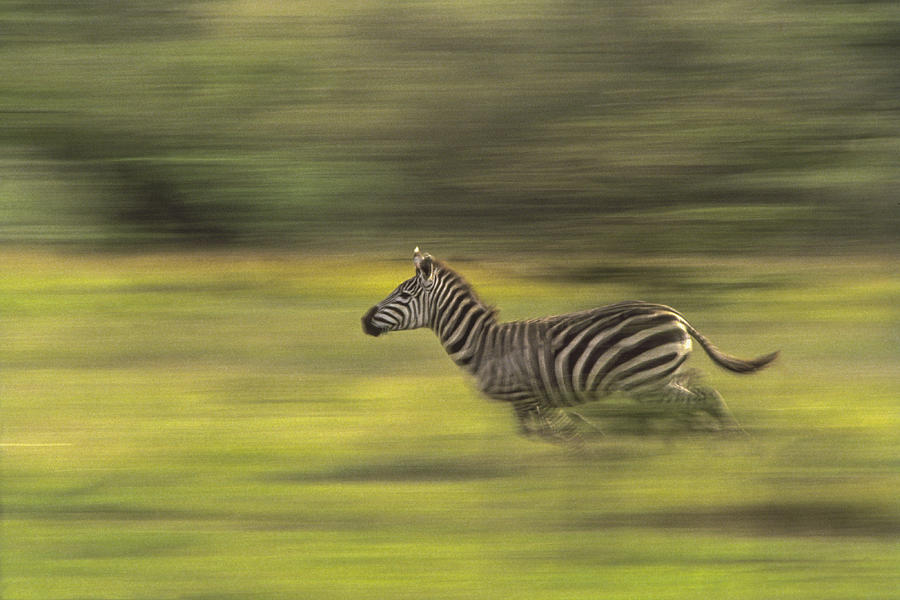
Of course, zebras don't get ulcers, and that's because they don't worry about things that are not immediate threats. But that's because zebras don't have much for a cerebral cortex. And that's where the tension comes from: Zebras can't even imagine that lion-that's-not-there-yet. So the trick is how to be a zebra with a massive cerebral cortex.

So let's make an amalgam of all this:

Enjoy the present,

be content with what you've got,

enjoy the people in your life,

don't worry about the future,

but imagine a better one,

prepare for it,

and create it.

And when it doesn't happen the way you planned, chill. Enjoy whatever did happen. Then plan "Plan B." And enjoy the planning, and anticipation, and preparation, and thrill as you attempt it...

And always, enjoy the people you're with the whole time, because that's actually the biggest part of it all--that's what makes it most enjoyable (see previous explanation of evolutionary perspective).

Be the river that flows over rock, boulder and stone, but flow uphill (and the hill is about people).

Monday, January 12, 2015

You are more than a grade


It's a tough balance--the balance between drive and contentment, between motivating students to push themselves, and realizing the value of contentment.

I find myself flipping back and forth between my own drivenness and this glimmer of an idea inside that the real way to happiness is just being mindful of everything.

I feel a bit like Siddhartha, I guess, and maybe I'm on that road, but right now I feel like the answer is somewhere between a headlong drive for achievement and Buddhist detatchment--a balance of the two, if that's possible.

And that balance, I hope, is making it's way into my classroom.

Achievement is a great goal, but it's not the only worthy one, and probably not the most important. There's a lot more to life than that sort of success.

There's a lot more to being human than that.

And if any of my students are reading: There's a lot more to you than your grades. You are not a grade. The value of your life is not measured by your grades.

But do your best.

And I'm here to help.

Wednesday, December 31, 2014

Wolf Den and the last wolf of Connecticut


"In those days we had never heard of passing up a chance to kill a wolf. In a second we were pumping lead into the pack, but with more excitement than accuracy: how to aim a steep downhill shot is always confusing. When our rifles were empty, the old wolf was down, and a pup was dragging a leg into impassable slide-rocks.

We reached the old wolf in time to watch a fierce green fire dying in her eyes. I realized then, and have known ever since, that there was something new to me in those eyes - something known only to her and to the mountain. I was young then, and full of trigger-itch; I thought that because fewer wolves meant more deer, that no wolves would mean hunters' paradise. But after seeing the green fire die, I sensed that neither the wolf nor the mountain agreed with such a view."

-Aldo Leopold, Thinking Like a Mountain


I wonder if old Israel Putnam thought that way as he dragged the last wolf in Connecticut out of Wolf Den. And today as I sat there, I thought about that last wolf, and then I thought about how transitory we all are compared to the rocks that form the den, rocks that watched not only the extirpation of wolves, but generations of ancient oaks and humans come and go. And I thought about time and perspective, and how limited mine is.

But Putnam's short-sighted perspective doesn't have to be mine. It doesn't have to be ours.

We can think like a mountain.


A rubric for a New Year's resolution?

My wife was telling me about her New Year's resolution last night.

Immediately putting on my administrator's hat and told her it needed to be more specific and measurable. You can't just say, "Do x more." You need to provide yourself with specific times, days, and criteria.

Maybe a rubric would be helpful. Something like:
4. Exceeds resolution
3. Masters resolution
2. Working towards mastery of resolution
1. Just getting started on resolution
Of course, you'll want to replace the word "resolution" above with specific criteria.

My daughter was listening and said, "This is what I get for having teachers for parents."

OK. Maybe a rubric is taking it a bit far, but I guess it depends. If you're like me, dealing with a to-do-list addiction and incipient S.M.A.R.T. goal overdose, maybe the last thing you need is more check-boxes and rubrics. Maybe you need an anti-resolution, something like, I am going to stop making everything into a check-list, spreadsheet, or rubric.

I've had a page in my bullet journal for a couple of weeks now entitled: "Stop Doing List." I read about it online somewhere. I'm supposed to make a list of things I should stop doing, so that I'm not so busy and distracted by things that crowd out my priorities. Unfortunately, I haven't thought of anything to put on it yet.

Sometimes I think I need to quit doing to-do-lists, like James Altucher suggests in his thought-provoking post, TO-DO LISTS ARE RUINING THE PLANET!

Maybe I need to stop trying to quantify everything.

No, that can't be right. Quantification is not the problem. Maybe I just need to be smarter about it: Shorter lists. Fewer goals.

The "one word resolution" idea making the rounds on the web is interesting. Maybe mine should be "fewer."

Now let's quantify that...